PDF(6046 KB)

Distribution and hydrocarbon accumulation conditions of carbonate rocks in Africa
XIAO Kunye, ZHOU Hongpu, OU Yafei, CHEN Zhongmin, LIN Zimo, SUO Xiaofei, CHEN Yajing, MA Xueying, ZHAO Ning
Marine Origin Petroleum Geology ›› 2025, Vol. 30 ›› Issue (5) : 401-412.
PDF(6046 KB)
PDF(6046 KB)
Distribution and hydrocarbon accumulation conditions of carbonate rocks in Africa
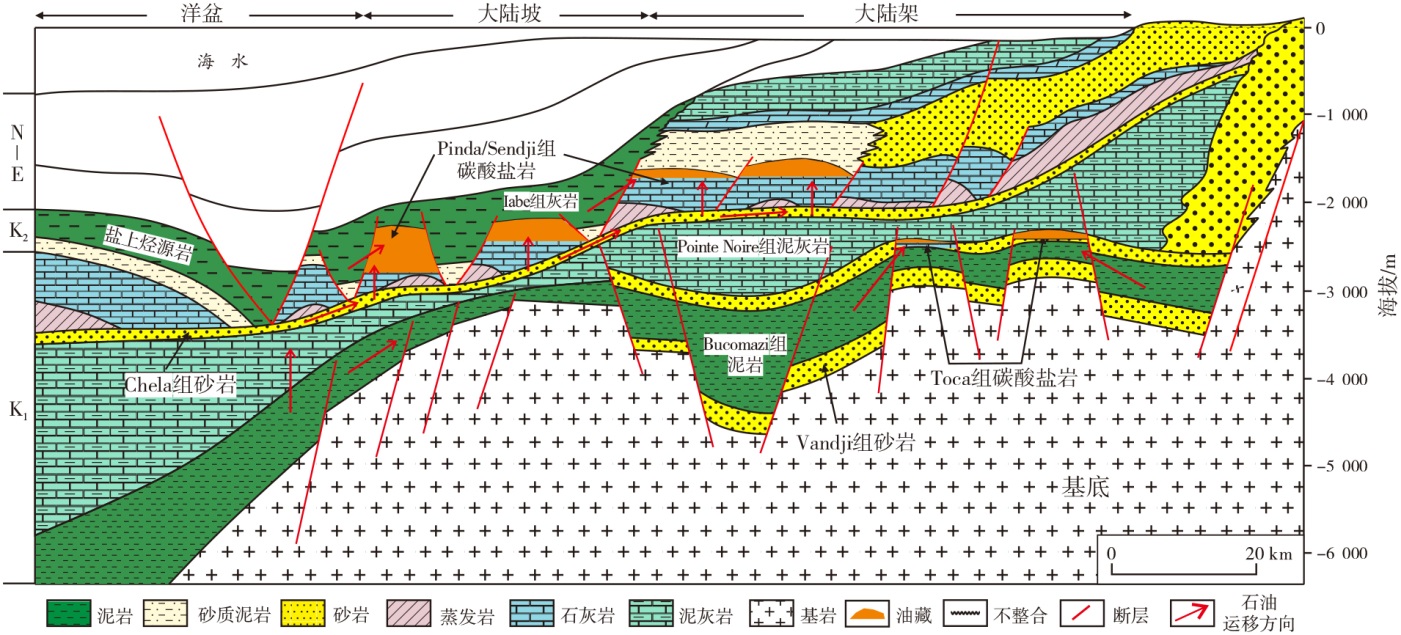
Carbonate rocks in Africa are characterized by extensive distribution along continental margins and scattered occurrences in the continent. Carbonate rocks are primarily distributed in rift basins and continental margin rift basins along the Tethyan margin of North Africa. Due to widespread marine transgressions during the Cretaceous and Cenozoic, North Africa remained in a passive margin or epeiric sea environment, in favor of extensive carbonate deposition. They also occur in passive continental margin basins of West and East Africa, although with limited continuity and thickness due to narrow continental shelves and high fluvial input. Scattered carbonate deposits are found within intraplate rifts and ancient cratonic basins, which are dominated by mixed clastic-carbonate sedimentation. Carbonate rocks are concentrated in the Cretaceous and Cenozoic, with localized occurrences in the Jurassic, and extremely limited prior to the Paleozoic. The accumulation conditions in African carbonate basins can be classified into three types: (1) The Sirte Basin and Pelagian Basin have vertical stacking of mudstones, carbonates, and evaporites due to multiple cycles of rifting, inversion, and sea-level fluctuations, indicating excellent petroleum systems in the Cretaceous and Cenozoic sequences. (2) The Kwanza Basin and Lower Congo Basin of West Africa have petroleum assemblage of lacustrine source rocks, lacustrine carbonates, and overlying evaporite seals, in addition, reservoirs with underlying lacustrine source rocks, overlying marine carbonates and mudstones developed. (3) The Eratosthenes isolated platform generated biogenic reef due to the inherited paleo-uplifts and suitable sea levels. There has an appropriate hydrocarbon system of Upper Cretaceous deep-sea source rocks, reef carbonate reservoirs, and Miocene evaporite seals.
carbonate rocks / hydrocarbon accumulation conditions / passive continental margin / rift basin / Africa
| [1] |
金振奎, 余宽宏, 潘怡, 等. 全球显生宙碳酸盐岩时空分布规律及其控制因素[J]. 现代地质, 2013, 27(3): 637-643.
<p>About 60% oil and gas of the world is produced from carbonate rocks. Where and when are carbonate rocks most developed in the world? What are the controlling factors? To figure out these questions is not only important to selection of strategic exploration areas abroad, but also important to understanding of global paleogeography. Based on various data from 179 carbonate basins in the world,global distribution of Phanerozoic carbonates and the controlling factors were studied in this paper. Carbonates occur in every geological period, but the degree of development is different. In the Devonian, Cretaceous and Paleogene, carbonates were widely spread, while in the Silurian, Permian, Triassic and Jurassic, distribution of carbonates was limited. In different geological periods, carbonates are developed in different areas. From the Cambrian to Ordovician, carbonates mainly occurred in Russia, China, North America and Australia. After the Triassic, carbonates mainly occurred in the Middle East, South Europe, North Africa and South America. In the Cenozoic, carbonates mainly occurred in the Middle East, North Africa and South Asia. Continental drifts and sea level change controlled distribution of carbonates. In the Paleozoic, the Laurasia (current Eurasia and North America), Siberia, South China and Australia were in low latitudes, where the sea was warm and carbonates were developed. But the Gondwana continent (current Africa and South America) were in high latitudes, where the sea was cold and not favorable for carbonate deposition. In the Mesozoic, the Laurasia drifted to high latitudes and thus little carbonates were deposited, while the Gondwana broke up and drifted to low latitudes and abundant carbonates were developed in South America and North Africa. In the Cenozoic, the Middle East and South Asia were in low latitudes and carbonates were developed. Thus carbonates distribution is well correlated with continental drift. Fluctuation of sea level is another important factor controlling the distribution of carbonates. When sea level rises, continental seas are widely formed, providing favorable sites for deposition of carbonates.When sea level falls, continent marginal seas are developed, which are not favorable for deposition of carbonates.</p>
|
| [2] |
|
| [3] |
张光亚, 童晓光, 辛仁臣, 等. 全球岩相古地理演化与油气分布(二)[J]. 石油勘探与开发, 2019, 46(5): 848-868.
基于中新生代6个地质时期现今地理位置和古板块位置岩相古地理图编制及分析,重点阐述中新生界岩相、古地理特征及其发育规律。结合前寒武纪及古生代各时期岩相古地理研究成果,系统研究前寒武纪以来全球岩相、古地理特征与演化规律及其对全球烃源岩、储集层、盖层形成和油气分布的控制作用。结果表明,前寒武纪以来,全球岩相古地理演化具有隆起剥蚀区及碎屑岩沉积区逐渐增加的趋势,大陆生长时期的隆起剥蚀区及碎屑岩沉积区显著增加;滨浅海相区具有前寒武纪—泥盆纪、石炭纪—三叠纪、侏罗纪—新近纪等3个明显的旋回,与之相对应浅水碳酸盐台地发育亦呈3个旋回;湖泊相在中新生代相对发育;蒸发岩盐沼相主要发育在泥盆纪、二叠纪、三叠纪。白垩系是全球最重要的烃源岩层系,其次是侏罗系和古近系烃源岩;碎屑岩储集层储集油气比碳酸盐岩储集层多;泥页岩为盖层的油气藏数量及油气储量最多,而蒸发岩盖层封闭能力最强,可形成一些超大型油气田。图12参45
|
| [4] |
|
| [5] |
|
| [6] |
|
| [7] |
温志新, 童晓光, 张光亚, 等. 全球板块构造演化过程中五大成盆期原型盆地的形成、改造及叠加过程[J]. 地学前缘, 2014, 21(3): 26-37.
原型盆地作为沉积盆地演化过程中某一地质时期的阶段表现,其对油气形成与分布的重要性不言而喻。基于威尔逊旋回原理研究发现,板块构造演化经过一个完整的周期,能够形成六大类17小类原型盆地。以全球五大成盆期(前寒武纪、早古生代、晚古生代、中生代及新生代)板块重建为基础,紧密结合古气候、岩相古地理等特征,恢复确定了1 056个原型盆地。前寒武纪残留下来的主要是位于现今各大陆块之上的裂谷等伸展型盆地;早古生代呈漂移状态为主的大小陆块主要形成被动大陆边缘和内克拉通盆地;晚古生代全球除了乌拉尔及阿特拉斯褶皱带发育前陆盆地外,其他地区仍以被动陆缘、内克拉通等伸展盆地为主;中生代潘吉亚超级大陆裂解,形成大量裂谷、被动大陆边缘盆地,西缘收缩形成科迪勒拉山弧后盆地;新生代新特提斯洋及美洲大陆弧后海关闭形成两大前陆盆地群,太平洋西海岸海沟岛弧边缘海盆体系范围明显扩大,印度洋及大西洋持续发育周缘被动大陆边缘盆地群。按原型盆地类型来看,被动大陆边缘盆地分布最广泛,其次是裂谷,弧前盆地最少。时代越新,原型盆地总数量越多,其中被动陆缘、前陆、弧后及弧前新生代最多,但裂谷盆地在中生代最广泛,内克拉通晚古生代最发育。
原型盆地作为沉积盆地演化过程中某一地质时期的阶段表现,其对油气形成与分布的重要性不言而喻。基于威尔逊旋回原理研究发现,板块构造演化经过一个完整的周期,能够形成六大类17小类原型盆地。以全球五大成盆期(前寒武纪、早古生代、晚古生代、中生代及新生代)板块重建为基础,紧密结合古气候、岩相古地理等特征,恢复确定了1 056个原型盆地。前寒武纪残留下来的主要是位于现今各大陆块之上的裂谷等伸展型盆地;早古生代呈漂移状态为主的大小陆块主要形成被动大陆边缘和内克拉通盆地;晚古生代全球除了乌拉尔及阿特拉斯褶皱带发育前陆盆地外,其他地区仍以被动陆缘、内克拉通等伸展盆地为主;中生代潘吉亚超级大陆裂解,形成大量裂谷、被动大陆边缘盆地,西缘收缩形成科迪勒拉山弧后盆地;新生代新特提斯洋及美洲大陆弧后海关闭形成两大前陆盆地群,太平洋西海岸海沟岛弧边缘海盆体系范围明显扩大,印度洋及大西洋持续发育周缘被动大陆边缘盆地群。按原型盆地类型来看,被动大陆边缘盆地分布最广泛,其次是裂谷,弧前盆地最少。时代越新,原型盆地总数量越多,其中被动陆缘、前陆、弧后及弧前新生代最多,但裂谷盆地在中生代最广泛,内克拉通晚古生代最发育。
|
| [8] |
|
| [9] |
|
| [10] |
|
| [11] |
窦立荣, 温志新, 王兆明, 等. 全球古老油气成藏组合资源潜力、重大发现及启示[J]. 石油学报, 2024, 45(8): 1163-1173.
全球已证实存在6套优质烃源岩,发育于前中生界的3套烃源岩构成了古老油气成藏组合的主要烃源岩。已发现的前中生界古老油气成藏组合有5个特点:①盆地类型以前陆盆地、被动陆缘盆地、克拉通盆地为主;②油气资源类型以常规油气为主,页岩油气发展迅速;③油气主要富集于二叠系、泥盆系、石炭系和奥陶系;④储层岩性主要为灰岩、砂岩、页岩和白云岩;⑤埋深以中—浅层为主,深层勘探潜力大。古老油气成藏组合的重大发现也具有在克拉通周缘、碳酸盐岩储层、页岩油气层系和基岩潜山4个领域富集的特征。通过对重点领域的重大发现解剖,指出长期处于低纬度热带辐合带的克拉通周缘易于形成优质生-储-盖组合;全球重大事件对烃源岩发育和页岩油气富集起着重要控制作用,可在全球重大事件时序框架下,通过重建成藏要素古位置超前优选潜在成藏组合。根据已发现油气可采储量和待发现油气资源自主评价结果,明确了常规油气资源应重点关注阿拉伯盆地、扎格罗斯盆地、塔里木盆地等;基岩潜山/残留层系也是值得重点关注的勘探领域;页岩油气应重点关注俄罗斯蒂曼—伯朝拉盆地和伏尔加—乌拉尔盆地泥盆系多玛尼克组页岩、中东地区阿拉伯盆地志留系热页岩、北非地区古达米斯盆地志留系和泥盆系、中国四川盆地和准噶尔盆地的页岩层系等领域。
Six sets of high-quality source rocks have been identified globally, with three of them in the pre-Mesozoic strata serving as the primary source rocks for ancient oil and gas reservoirs. Ancient oil and gas reservoirs from the pre-Mesozoic strata exhibit five key characteristics. (1) The predominant basin types include foreland, passive continental margin, and cratonic basins. (2) Their primary type of oil and gas resources remains conventional, although shale oil and gas is developing rapidly. (3) Their oil and gas accumulations are primarily concentrated in the Permian, Devonian, Carboniferous, and Ordovician. (4) Their reservoir lithology is primarily composed of limestones, sandstones, shales, and dolomites. (5) Their burial depth is predominantly within the middle to shallow layers, indicating significant potential for deep plays. The substantial discoveries of ancient oil and gas plays demonstrate enrichment in four fields: the periphery of cratons, carbonate reservoirs, shale oil and shale gas reservoirs, and basement reservoirs. After analyzing the major discoveries in key areas, it is revealed that high-quality source-reservoir-seal combinations form readily in the peripheral regions of cratons that were historically located within low-latitude intertropical convergence zones. Global significant events have played a crucial role in shaping the development of source rocks and the enrichment of shale oil and gas. Within the temporal framework of these significant global events, potential plays can be optimized in advance by reconstructing the paleo-positions of accumulation elements. Based on independent evaluations of recoverable oil and gas reserves and yet-to-be-discovered resources, it is evident that conventional oil and gas exploration should focus on the Arabian Basin, Zagros Basin, Tarim Basin, and other basins. Basement rocks and residual strata are also important potential exploration areas. For shale oil and shale gas exploration, the focus should be on the Devonian Domanik shale in the Timan-Pechora and the Volga-Ural basins in Russia, the Silurian hot shale in the Arabian Basin in the Middle East, the Silurian and Devonian plays in the Ghadames Basin in the North Africa, and several sets of shales in the Sichuan and Junggar basins in China.
|
| [12] |
|
| [13] |
王洪浩, 李江海, 李维波, 等. 冈瓦纳大陆古生代冰盖分布研究[J]. 中国地质, 2014, 41(6): 2132-2143.
|
| [14] |
|
| [15] |
|
| [16] |
张光亚, 刘小兵, 温志新, 等. 东非被动大陆边缘盆地构造:沉积特征及其对大气田富集的控制作用[J]. 中国石油勘探, 2015, 20(4): 71-80.
In the past five years, a number of giant gas fields have been discovered in offshore East Africa. They are mainly located in Ruvuma and Tanzania Basins, with total recoverable reserves of 3.8?0<sup>12</sup> m<sup>3</sup>. It is indicated by regional tectonic evolution study and basin structure-sedimentation characteristics analysis that the basins in East Africa mainly experienced three phases of structural-sedimentary evolution, including: (1) Karoo rift period of Late Carboniferous to Early Jurassic, with dominant sedimentary facies of fluvial, lacustrine and delta; (2) Madagascar rift period of Middle Jurassic to Early Cretaceous, with dominantly continental and shallow marine facies, the principal source rocks developed; and (3) Madagascar drift period of Late Cretaceous to Quaternary, with dominantly passive continental margin sedimentation, with turbidite sandstones of abyssal fan, slope fan and gravity flow channel as major reservoirs and the shales as regional cap rocks. Major plays of the giant gas fields are Oligocene-Pliocene, Paleocene-Eocene sandstones in the Ruvuma Basin, and Oligocene and Upper Cretaceous sandstones in the Tanzania Basin. In Ruvuma Basin, the giant gas fields are mainly located at deep-water thrust belts and their fronts. Thrust belts are widely developed at Ruvuma front due to gravity collapse and Jurassic salt diaper, and they act as good migration pathways for oil and gas. Oil and gas migrates upwards from the deep source rocks and accumulates in sandstone reservoirs of thrust belts. In Tanzania Basin, giant gas fields are mainly located at the gravity flow channel sandstones of slopes, and oil and gas accumulation is controlled by the S-N normal faults.
|
| [17] |
|
| [18] |
|
| [19] |
陈忠民, 张光亚. 北非石油地质及资源评价: 油气概论[M]. 北京: 石油工业出版社, 2024.
|
| [20] |
|
| [21] |
陈忠民, 万仑坤, 毛凤军, 等. 北非石油地质特征与勘探方向[J]. 地学前缘, 2014, 21(3): 63-71.
通过对北非地区不同沉积盆地石油地质特征的系统分析,证实该地区的海西运动控制了北非古生界盆地的构造格局、变形样式及油气运聚;北非地区划分为6大构造分区和3大油气富集区;北非地区沉积盖层分为古生代碎屑岩沉积冈瓦纳超旋回、中新生代碎屑岩、蒸发岩和碳酸盐沉积特提斯超旋回;有效烃源岩的分布和差异是北非油气富集程度的主控因素,并形成北非古生代及蒸发岩下含油气系统及中新生代含油气系统两大油气聚集系统。在此认识和非洲资源评价的基础上,提出北非油气潜力及勘探方向为古生界克拉通坳陷盆地的岩性油气藏、低幅度构造,中新生界裂谷盆地的锡尔特盆地、佩拉杰盆地的岩性油气藏及断块、新生界三角洲的深海扇沉积体。
通过对北非地区不同沉积盆地石油地质特征的系统分析,证实该地区的海西运动控制了北非古生界盆地的构造格局、变形样式及油气运聚;北非地区划分为6大构造分区和3大油气富集区;北非地区沉积盖层分为古生代碎屑岩沉积冈瓦纳超旋回、中新生代碎屑岩、蒸发岩和碳酸盐沉积特提斯超旋回;有效烃源岩的分布和差异是北非油气富集程度的主控因素,并形成北非古生代及蒸发岩下含油气系统及中新生代含油气系统两大油气聚集系统。在此认识和非洲资源评价的基础上,提出北非油气潜力及勘探方向为古生界克拉通坳陷盆地的岩性油气藏、低幅度构造,中新生界裂谷盆地的锡尔特盆地、佩拉杰盆地的岩性油气藏及断块、新生界三角洲的深海扇沉积体。
|
| [22] |
|
| [23] |
|
| [24] |
|
| [25] |
|
| [26] |
|
| [27] |
张光亚, 余朝华, 陈忠民, 等. 非洲地区盆地演化与油气分布[J]. 地学前缘, 2018, 25(2): 1-14.
非洲地区盆地整体勘探程度较低,待发现资源量大,是当前油气勘探开发的热点地区之一。非洲板块在显生宙主要经历了冈瓦纳大陆形成、整体运动和裂解3个构造演化阶段,形成多种不同类型的盆地。通过板块构造演化和原型盆地研究及石油地质综合分析,明确了不同类型盆地的构造特征与油气富集规律。北非克拉通边缘盆地形成于古生代早期,受海西运动影响,油气主要富集在挤压背景下形成的大型穹隆构造之中,以古生界含油气系统为主;北非边缘裂谷盆地海西运动之后普遍经历了裂谷和沉降,裂谷期各盆地沉降幅度和沉降中心的差异导致了油气成藏模式和资源潜力的差异;东、西非被动陆缘盆地形成于中生代潘吉亚大陆的解体、大西洋和印度洋张裂的过程中,西非被动陆缘盆地普遍发育含盐地层,形成盐上和盐下两套含油气系统,东非被动陆缘盆地结构差异较大,油气分布主要受盆地结构控制;中西非裂谷系是经历早白垩世、晚白垩世和古近纪3期裂谷作用而形成的陆内裂谷盆地,受晚白垩世非洲板块与欧亚板块碰撞的影响,近东西向展布盆地抬升剧烈,油气主要富集在下白垩统,北西南东向盆地受影响较弱,油气主要富集在上白垩统和古近系之中;新生代东非裂谷系盆地和红海盆地形成时间相对较晚,以新生界含油气系统为主,新生代三角洲盆地中油气分布主要受三角洲砂(扇)体展布和盆地结构所控制。
The African sedimentary basins, with relatively low degree of exploration and huge undiscovered hydrocarbon reserve, are the present hot spots for oil and gas exploration. The African Plate mainly experienced three tectonic evolution stages during Phanerozoic, during which the forming, drifting and breaking up of the Gondwanaland led to the development of several types of African basins. Based on our basin study of tectonic evolution and prototype and petroleum geological analysis, the structural characteristics and rules of hydrocarbon accumulation in different types of rifts are determined as follows. The pericratonic basins in North Africa initiated in the early Paleozoic, in which hydrocarbons mainly distributed in the huge dome structures, formed under the compression of the Hercynian movement, and the Paleozoic petroleum system dominated in the pericratonic basins. The continental margin rift basins in North Africa experienced rifting and subsidence after the Hercynian movement, and the differences in subsidence intensity and depocenter led to diversity in hydrocarbon accumulation and resource potential. The passive margin rift basins in the East and West Africa formed during the Pangea paleoplate breakup and Atlantic and Indian Ocean rifting: in the west, saliferous formations are widely distributed with two petroleum systems developed above and below the saline formations, respectively; in the east, hydrocarbon distribution is heterogenous and controlled primarily by the structural architectures of the basins. The intraplate Central and West Africa rift basins experienced three periods of rifting, i.e, the Early Cretaceous, Late Cretaceous and Paleogene. The EW striking basins were uplifted intensely under compression from the collision of the African and Eurasian Plates in the Late Cretaceous; as a result, hydrocarbons accumulated primarily in the Lower Cretaceous. The NWSE striking basins, slightly affected by the collision, have hydrocarbon distributions mainly in the Upper CretaceousPaleogene. Finally, the eastern African rift basins and the Red Sea basin are newly formed Cenozoic basins with dominant Cenozoic petroleum system. The hydrocarbon in the Cenozoic delta basins is controlled by fan delta sand body distribution and basin architecture.<br>
|
| [28] |
|
| [29] |
|
| [30] |
Interpretation of a 20 550 line km 2D seismic survey acquired in 2014 by Soma Oil and Gas in the deep water offshore area of SE Somalia has identified three previously undocumented sedimentary provinces – Jubba Deep, Mogadishu Deep and Mid Somalia High – all of which have distinctive geological characteristics. Well and stratigraphic controls are limited, with inferred lithologies largely based on seismic stratigraphic interpretation.
|
| [31] |
|
| [32] |
|
| [33] |
|
| [34] |
|
| [35] |
|
| [36] |
|
| [37] |
|
| [38] |
汪焰. 北非锡尔特与佩拉杰盆地油气资源潜力分析[J]. 石油实验地质, 2014, 36(4): 459-464.
|
| [39] |
|
| [40] |
范洪耀, 陶维祥, 于水, 等. 下刚果盆地油气成藏条件及勘探潜力分析[J]. 海洋石油, 2012, 32(2): 16-20.
|
| [41] |
程涛, 陶维祥, 康洪全, 等. 下刚果盆地北部海域海相碳酸盐岩沉积储层特征[J]. 海洋地质与第四纪地质, 2020, 40(2): 148-157.
|
| [42] |
|
| [43] |
马君, 刘剑平, 潘校华, 等. 西非被动大陆边缘构造演化特征及动力学背景[J]. 中国石油勘探, 2008, 13(3): 60-64.
|
| [44] |
杨晓兰. 安哥拉宽扎盆地白垩系油气成藏条件及勘探潜力[J]. 科学技术与工程, 2020, 20(26): 10720-10726.
|
| [45] |
夏大磊. 西非宽扎盆地成藏组合研究及资源潜力评价[D]. 北京: 中国石油大学(北京), 2019.
|
| [46] |
高华华, 童晓光, 温志新, 等. 东地中海原型盆地演化[J]. 地学前缘, 2020, 27(4): 255-271.
东地中海经历了伸展-聚敛的构造演化旋回,聚集了丰富的油气资源。基于2D地震、ODP Leg160、IHS及Tellus商业数据库和公开发表的文献资料,本文在建立东地中海及周缘构造-地层格架的基础上,恢复了东地中海12个关键地质历史时期的原型盆地,并以板块构造为切入点探讨了盆地演化机制。东地中海及周缘上三叠统以来地层可划分为新特提斯被动大陆边缘陆地及浅水区、新特提斯被动大陆边缘深水区和塞浦路斯弧前褶皱区3个地层分区,前两个地层分区均发育一套裂谷-被动大陆边缘层系,但是二者的岩相特征和不整合发育有明显的差异,而塞浦路斯弧前褶皱区发育一套大洋盆地-弧前盆地层系。研究认为东地中海经历了二叠纪—早侏罗世裂解期、中侏罗世巴柔期—晚白垩世土伦期漂移期和晚白垩世森诺期以来的汇聚改造期3个原型阶段,其中汇聚改造期又可细分为晚白垩世森诺期“双俯冲带”消减期、古近纪北部俯冲-碰撞期、中新世塞浦路斯岛弧带南侧俯冲-碰撞与黎凡特边缘活化期和中新世梅西期以来“弧-山碰撞”与“走滑逃逸”期4个阶段。东地中海盆地演化受控于图哈罗德-安纳托利亚板块以及凯里尼亚、特罗多斯和埃拉托色尼等微板块与冈瓦纳大陆北缘的分离、向北的漂移和与欧亚大陆汇聚拼贴的板块构造活动。
The Eastern Mediterranean Sea experienced an extension-convergence tectonic cycle, accumulating abundant oil and gas resources. Based on 2D seismic data, ODP Leg160, IHS and Tellus commercial database as well as published papers, we constructed the tectonic-stratigraphic framework of the Eastern Mediterranean Sea and its adjacent area, and restored prototype basins in 12 critical geological periods. We also discussed basin evolution mechanism from the perspective of plate tectonics. The Upper Triassic-the Quaternary in the Eastern Mediterranean Sea can be divided into three regions: the onshore and shallow water region at the Neotethys passive continental margin, deep water region at the Neotethys passive continental margin and the Cyprus forearc fold belt. The first two stratigraphic regions consist of a set of rift-passive continental margin stratum system. However, significant differences in lithofacies and unconformity are in these two regions. A set of oceanic basin-forearc basin stratum system developed in the Cyprus forearc fold belt. The results show that the evolution of the Eastern Mediterranean Sea can be divided into three phases: the Permian-Early Jurassic rifting phase, the Middle Jurassic Bajocian-Late Cretaceous Turonian drifting phase and the convergence and transformation phase since the Late Cretaceous Senonian. The last phase can be subdivided into four stages, including the “double subduction zones” during the Late Cretaceous Senonian, the subduction-collision at the north during the Paleogene, the subduction-collision at the south of the Cyprus Arc and reactivity of the Levant margin during the Miocene, and the “arc-seamount” collision and plate escaping since the Miocene Messinian. The basin evolution was controlled by rifting of continental fragments, including the Tauride-Anatolian plate and the micro-plates (Kyrenia, Troodos and Eratosthenes) from Gondwana, as well as by northward drifting and collision of Eurasia and these continental fragments. |
| [47] |
温志新, 童晓光, 高华华, 等. 东地中海孤立碳酸盐台地沉积建造与油气成藏[J]. 石油勘探与开发, 2021, 48(2): 279-289.
基于区域地质、二维地震及大洋钻探等数据,通过构造精细解释及地震相研究,分析了东地中海埃拉托色尼海山(ESM)及其周缘孤立台地形成、生物礁体类型及油气成藏条件等,指出了未来勘探方向。研究表明,东地中海ESM等系列孤立碳酸盐台地形成演化与新特提斯洋的开合休戚相关,早期为从非洲-阿拉伯板块上裂解出来的垒式断块,形成于中三叠世—早侏罗世陆内裂谷阶段,经过中侏罗世陆间裂谷阶段、晚中侏罗世—晚白垩世土伦期漂移阶段和晚白垩世森诺期—中新世俯冲消减阶段继承性碳酸盐岩沉积建造,晚中新世梅西期以来受新特提斯洋关闭影响发生中—轻度反转改造。受不同古构造背景控制形成3类孤立台地,一是小规模狭窄垒式断块所控制的单个点礁型孤立台地,二是中等规模宽缓垒式断块所控制的单个环礁型孤立台地,三是大规模宽缓古隆起控制形成的多个礁滩复合体型孤立台地。前两类在埃南和埃西凸起上普遍发育,第3类只分布于ESM海山之上。纵向上,受海平面升降影响,ESM古隆起、埃南和埃西凸起上均发育了中侏罗统巴柔阶—上白垩统土伦阶和中新统两套礁体建造。单个点礁型孤立台地和单个环礁型孤立台地已被钻井证实具有优越的天然气成藏条件,ESM海山隆起带上多个礁滩复合体型孤立台地同样值得探索。图11参42
|
| [48] |
|

/
| 〈 |
|
〉 |