PDF(19728 KB)

Microscopic pore structure characteristics and controlling factors of the tight limestone: a case study of the Taiyuan Formation in Hengshan area, Ordos Basin
ZHANG Daofeng, YANG Bowei, LI Cheng, XIONG Ying, LIU Yan, DU Jiansheng, ZHANG Ruoxian, ZHONG Shoukang, TAN Xiucheng
Marine Origin Petroleum Geology ›› 2026, Vol. 31 ›› Issue (1) : 17-32.
PDF(19728 KB)
PDF(19728 KB)
Microscopic pore structure characteristics and controlling factors of the tight limestone: a case study of the Taiyuan Formation in Hengshan area, Ordos Basin
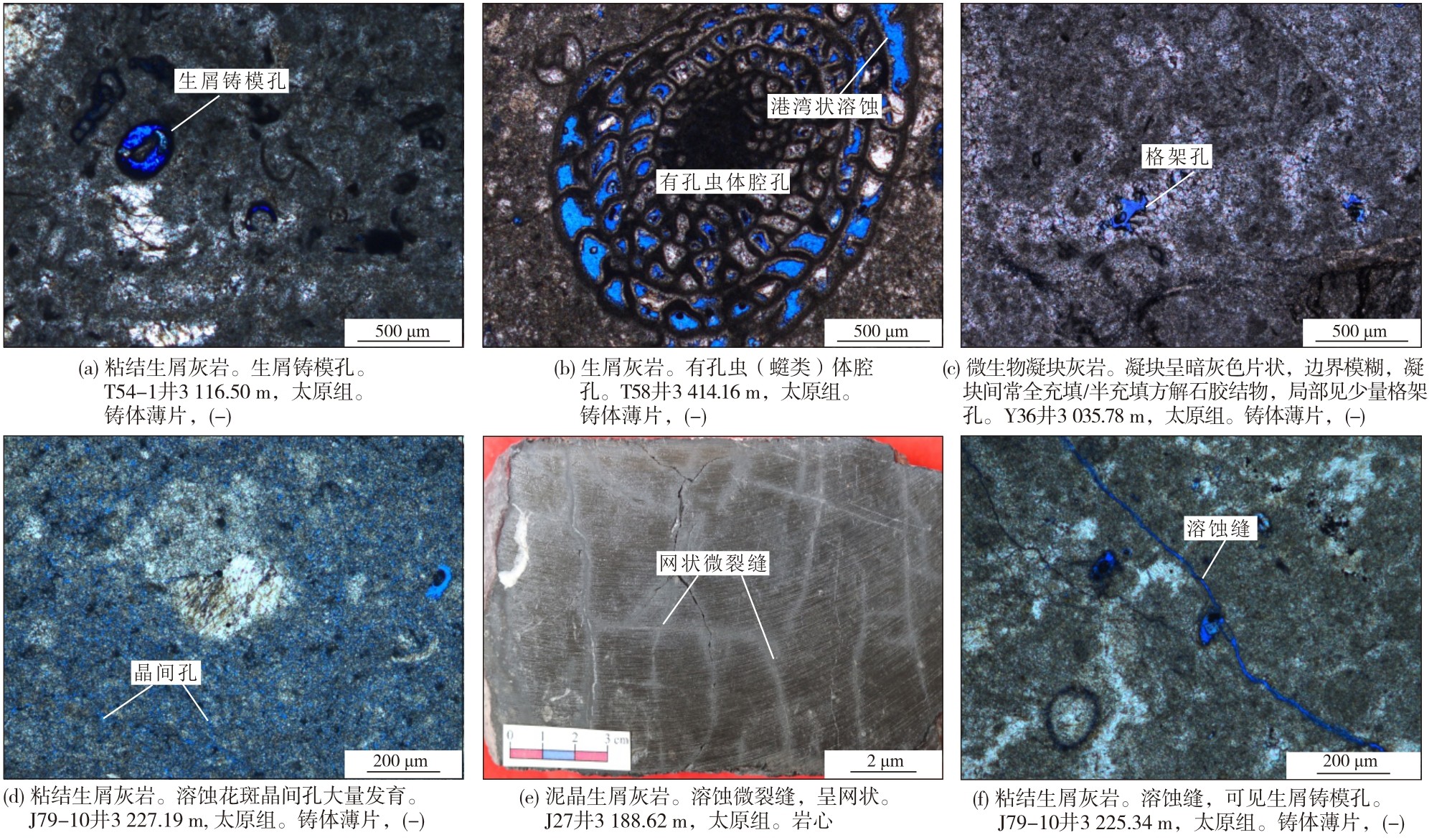
The Permian Taiyuan Formation tight limestone in the Ordos Basin exhibits significant exploration potential. Multiple high-risk exploration wells, such as YT1H well and ZT1H well, have yielded high industrial gas flows, making this formation a key target for natural gas exploration. However, strong reservoir heterogeneity and poorly understood microscopic pore structure characteristics and controlling factors have hindered further gas exploration planning in this area. Based on observations of core observations of, cast thin sections, and field emission scanning electron microscopy (FE-SEM), combined with low-temperature nitrogen adsorption experiments, and high-pressure mercury intrusion porosimetry (MIP), this study systematically investigates the microscopic pore structure characteristics and their controlling factors in the tight limestone reservoirs of the Taiyuan Formation. The influence of differential dissolution during the early diagenetic stage on pore structure is revealed. The results indicate: (1) The Taiyuan Formation develops reservoir rocks including bound bioclastic limestone, micritic bioclastic limestone, and bioclastic micritic limestone. Main types of reservoir space include moldic pores, intraskeletal pores, framework pores, intercrystalline pores, and dissolved micro-fractures. Porosity ranges from 0.38% to 9.34%, and permeability ranges from 0.002×10⁻³ μm2 to 0.776×10⁻³ μm2, characterizing a low-porosity, low-permeability tight reservoir. (2) The pore structure exhibits strong heterogeneity, with multimodal pore size distribution showing peaks in ranges such as 3-4 nm, 50-100 nm, and 700 nm-2 μm. The reservoir contains coexisting micro-scale and nano-scale pore systems, where storage capacity is mainly contributed by macropores and micropores, while adsorption capacity is dominated by micropores and mesopores. (3) Reservoir properties are controlled by heterogeneous pore structure. Porosity and permeability show positive correlations with average and median pore-throat radii, but a negative correlation with pore-throat sorting coefficient. Compared to porosity, pore-throat size and uniformity exert a greater influence on permeability. (4) The heterogeneity of the microscopic pore structure is closely related to differential dissolution during early diagenesis. Moderate karstification improves pore structure, whereas excessive dissolution leads to deterioration. In the slight dissolution stage (selective dissolution), pores are mainly micropores and mesopores, with fine throat types. Under moderate dissolution (mottled dissolution), enhanced karstification transforms micropores and mesopores into macropores and micrometer-scale pores, resulting in medium pore-throat systems. In the over-dissolution stage (karst brecciation), the karst system disrupts the bedrock, leading to degraded pore structure characterized by medium pores and fine throats.
tight limestone / pore structure / reservoir characteristics / early diagenetic karst / Taiyuan Formation / Ordos Basin
| [1] |
赵文智, 沈安江, 胡安平, 等. 塔里木、四川和鄂尔多斯盆地海相碳酸盐岩规模储层发育地质背景初探[J]. 岩石学报, 2015, 31(11): 3495-3508.
|
| [2] |
刘新社, 何佳峻, 魏柳斌, 等. 鄂尔多斯盆地中东部奥陶系盐下层系白云岩储层沉积特征及发育演化机理[J]. 地质科学, 2024, 59(3): 637-659.
|
| [3] |
张军涛, 李松, 金晓辉, 等. 鄂尔多斯盆地南部寒武系张夏组储层特征与主控因素[J]. 地质论评, 2025, 71(1): 55-66.
|
| [4] |
黄军平, 范立勇, 张艳, 等. 鄂尔多斯盆地寒武系天然气成藏地质特征与勘探方向[J]. 中国石油勘探, 2025, 30(1): 98-110.
|
| [5] |
钟寿康, 谭秀成, 魏柳斌, 等. 鄂尔多斯盆地奥陶系马家沟组一段—三段构造沉积演化及其油气地质意义[J]. 石油勘探与开发, 2024, 51(5): 1040-1052.
基于测井、岩心、薄片、地球化学分析,重建鄂尔多斯盆地奥陶系马家沟组一段—三段(简称马一段—马三段)构造-岩相古地理格局,探讨构造沉积演变特征及其油气地质意义。研究表明:①马家沟组底部稳定发育一套穿时的、高自然伽马值段、边缘相泥质白云岩,分布于怀远运动期构造不整合面之上,具有与早奥陶世弗洛期全球海侵可对比的δ<sup>13</sup>C正漂移特征;②奥陶系马一段—马二段沉积期全球海平面上升、古陆淹没为水下隆起,形成一隆两坳构造格局,中央隆起首次接受沉积;随后马三段沉积期盆外俯冲挤压、盆内隆坳分异,乌审旗—靖边凸起活化;③构造格局演变对沉积古环境产生显著影响,马一段沉积期向西超覆,东部坳陷内海侵封隔形成大规模盐质蒸发潟湖;马二段沉积期持续海侵并沟通广海,环东部坳陷发育大规模颗粒滩,晚期干化收缩形成小规模蒸发潟湖;马三段沉积期受高地封隔影响,向东侧水体渐次分异分别形成云膏质和盐质蒸发潟湖,同时颗粒滩环凹沿高地展布;④马家沟组底部发育烃源岩,马二段和马三段滩相储层环坡展布,源储配置良好,有利于天然气成藏,具有一定勘探潜力。
|
| [6] |
|
| [7] |
付金华. 鄂尔多斯盆地太原组致密灰岩天然气成藏地质特征与勘探潜力[J]. 地学前缘, 2023, 30(1): 20-29.
2021年鄂尔多斯盆地榆探*H在太原组灰岩完钻喜获日产超50万m<sup>3</sup>的高产工业气流,勘探取得重大突破,同时还有700余口探井在太原组灰岩见到明显的含气显示,展示了盆地太原组灰岩良好的潜力,对于重新认识盆地太原组灰岩勘探领域具有极其重大的地质意义。对该区烃源岩特征、沉积环境、储集特征及成藏组合等进行综合研究表明:(1)太原组灰岩为陆表海碳酸盐沉积,发育生屑滩、生物丘有利沉积相带,沉积大面积分布的生屑粉晶灰岩、藻黏结灰岩,经准同生期短暂的大气淡水淋滤后,可形成有利储层;(2)太原组灰岩发育多类型储集空间,溶孔、亚微米级及纳米级晶间微孔、微裂缝等叠置组合发育,构成立体网络储集空间,平面上,横山—靖边—志丹生屑粉晶灰岩储层发育,厚4~10 m,佳县—子洲—清涧地区藻黏结灰岩储层发育,厚2~6 m;(3)发育“三明治”成藏模式,灰岩储层夹在主力煤系烃源岩之间,生成的天然气通过断裂、裂缝进入灰岩储层聚集,形成岩性气藏,横山—靖边地区的生屑滩和子洲—清涧的生物丘是太原组灰岩有利勘探区,面积约为1.5万km<sup>2</sup>,有望形成天然气增储上产的现实领域。
In 2021, a high-yield daily output of more than 5.0×10⁵ m3 industrial gas was obtained in well Yutan*H, signifying a major breakthrough in natural gas exploration in the limestone reservoir of Taiyuan Formation, Ordos Basin. Now, more than 700 exploratory wells have good gas shows in the reservoir, showing excellent exploration potential, which is of great significance for further studying the geological characteristics of the limestone of Taiyuan Formation. Based on comprehensive analysis of the source rock characteristics, sedimentary environment, reservoir characteristics and hydrocarbon accumulation assemblage in the area, we show that: (1) The limestone of Taiyuan Formation is an epicontinental carbonate deposit, in which favorable sedimentary facies belt composed of bioclastic beach and biological mound is developed, and the widespread bioclastic silty limestone and algal-rich limestone can form favorable reservoirs after short-term leaching by atmospheric freshwater in penecontemporaneous period. (2) The limestone of Taiyuan Formation develops several types of reservoir space, where solution pores, submicron to nano intergranular micropores and microfractures superimpose to form a three-dimensional reservoir space; meanwhile across the region, 4-10 m thick bioclastic silty limestone reservoir develops in the Hengshan-Jingbian-Zhidan area, and 2-6 m thick algal-rich limestone reservoir develops in the Jiaxian-Zizhou-Qingjian area. (3) The hydrocarbon accumulation mode has a “sandwich-like” structure, where the limestone reservoir is sandwiched between main coaly source rocks, and the generated natural gas enters limestone reservoir through faults and fractures to accumulate and form a lithologic gas reservoir. With a combined area of 1.5×10⁴ km2, the bioclastic beach in Hengshan-Jingbian area and the biological mound in Zizhou-Qingjian area are the favorable exploration targets for the limestone of Taiyuan Formation, which is expected to bring the increase of natural gas reserve and production. |
| [8] |
付金华, 赵会涛, 董国栋, 等. 鄂尔多斯盆地新领域油气勘探发现与前景展望[J]. 天然气地球科学, 2023, 34(8): 1289-1304.
鄂尔多斯盆地是中国第二大沉积盆地,油气资源丰富,中国石油长庆油田公司经过50余年勘探实践,创新形成了内陆坳陷湖盆大型三角洲、陆相致密砂岩气、奥陶系岩溶古地貌等成藏地质理论,2022年油气产量跨越6 500×10<sup>4</sup> t油气当量,其中天然气年产量首次突破500×10<sup>8</sup> m<sup>3</sup>,建成了中国第一大油气生产基地和第一大天然气产区。近年来,长庆油田公司为进一步夯实油气持续稳产上产的资源基础,不断深化地质综合研究,强化技术攻关,加大新区新领域风险勘探力度,油气勘探取得丰硕成果。通过创新中生界延长组长7<sub>3</sub>纹层型页岩油和新层系长8<sub>2</sub>滩坝型致密油成藏理论认识,新增石油规模储量为4×10<sup>8</sup> t;创新盆地奥陶系盐下、太原组致密灰岩和盆地西缘乌拉力克页岩油气成藏理论,新增天然气规模储量超4 000×10<sup>8</sup> m<sup>3</sup>;同时攻关形成了地球物理、压裂等一系列非常规油气勘探新技术,油气勘探取得重大发现,预计盆地新增石油资源潜力(20~40)×10<sup>8 </sup>t、天然气资源潜力(2~3)×10<sup>12</sup> m<sup>3</sup>,为保障长庆油田公司6 500×10<sup>4</sup> t以上油气当量稳产奠定了坚实的资源基础。
Ordos Basin is the second largest sedimentary basin in China with abundant oil and gas resources. After more than 50 years of exploration practice, PetroChina Changqing Oilfield Company has innovated reservoir-forming geological theories such as large delta of inland depression lake basin, continental tight sandstone gas and Ordovician karst paleo-landform. In 2022, the oil and gas equivalent has exceeded 65 million tons, and the China's largest oil and gas production base and largest natural gas production area have been built. In recent years, in order to further consolidate the resource base for continuous and stable production of oil and gas, Changqing Oilfield Company has continuously deepened comprehensive geological research, strengthened technical research, and increased risk exploration efforts in new areas. Oil and gas exploration has achieved fruitful results. Through innovative theoretical understanding of the formation of the Mesozoic Chang 73 laminated shale oil and the new series Chang 82 beach bar tight oil reservoir, the new oil reserves increased by 400 million tons; Natural gas exploration has innovated the theory of oil and gas accumulation in Ordovician undersalt, Taiyuan Formation biolimestones and Ulalik shale in the western margin of the basin, increased the scale of reserves by more than 400 billion cubic meters. At the same time, a series of new unconventional oil and gas exploration technologies such as geophysics and fracturing have been formed, and major discoveries have been made in oil and gas exploration. It is estimated that the new oil resource potential of the basin is 2-4 billion tons, and the natural gas resource potential is 2-3 trillion cubic meters. It has laid a solid resource foundation for ensuring long-term stable production of more than 60 million tons of Changqing Oilfield Company. |
| [9] |
古永红, 周长静, 马占国, 等. 致密灰岩水平井复合缝网加砂压裂技术研究与矿场实践[J]. 中国石油勘探, 2024, 29(3): 159-169.
鄂尔多斯盆地太原组石灰岩资源丰富,是长庆油田天然气勘探开发的重要接替领域。但由于储层致密、厚度薄、酸岩反应速率快等因素,以往多种酸压工艺均未能获得产量突破。为此,转变增产技术思路,强化裂缝扩展规律实验研究、压裂液及关键材料研发配套、体积压裂模式精细刻画,形成“多段少簇密集造缝、酸压—加砂双元复合”为一体的水平井复合缝网加砂压裂技术。通过开展大露头压裂物理模拟实验,结合储层地质特点及岩石力学特征,明确储层高脆性、低两向水平主应力差、微裂缝发育特征,采用体积压裂工艺能够实现复杂缝网改造;集“深度酸压+大规模加砂”双重技术优势,构建“水力缝网+ 酸蚀裂缝”相结合的高导流裂缝流动通道,结合水平井密切割压裂大幅提高裂缝改造体积;针对石灰岩高杨氏模量、高破裂压力、高裂缝延伸压力、低裂缝宽度的三高一低特征,通过提高套管承压等级、差异化裂缝铺砂设计,形成多尺度小粒径连续加砂模式,解决了高杨氏模量储层加砂难问题;基于基质、壁面、裂缝三级伤害评价,研发低伤害变黏滑溜水体系,实现高杨氏模量储层造缝、成网、携砂需求。现场试验4口井,平均单井产量为59.7×10<sup>4</sup>m<sup>3</sup>/d,较酸压直井提高5~20倍以上,增产效果显著。目前,水平井复合缝网加砂压裂技术已成为太原组石灰岩水平井储层改造的主体技术,为该类气藏的勘探突破及有效开发提供了有力的技术保障。
Ordos Basin has abundant natural gas resources in Taiyuan Formation limestone reservoir, which is a major replacement field for gas exploration and development in Changqing Oilfield Company. However, no gas production breakthrough has been made before by using various acid fracturing technologies due to the factors such as tight limestone, thin reservoir thickness, and fast acid-rock reaction rate. As a result, after changing idea of well stimulation technology, study on fracture propagation mechanism, research and development of support technologies of fracturing fluids and key materials, and fine characterization of volume fracturing mode have been strengthened, developing an integrated horizontal well composite fracture network sand fracturing technology with “multiple stages, less clusters, dense fractures, and composite acid-sand fracturing”. Based on the physical simulation experiments on large outcrop, and combined with geological characteristics and rock mechanic properties, the reservoir characteristics of high brittleness, low difference between the two horizontal principal stresses and well-developed natural fractures are determined, and the volume fracturing technology enables to obtain complex fracture network. By applying the double technological advantages of “deep acid fracturing + large-scale sand fracturing”, a high-conductivity fracture flow pathway with “hydraulic fracture network + acid corrosion fracture” has been constructed, which supports to significantly increase fracture volume together with densely cutting fracturing in horizontal well. In view of the limestone characteristics of high Young’s modulus, high fracture pressure, high fracture propagation pressure and low fracture width, the anti-pressure level of casing pipe has been improved and differential design of sand placement for fractures has been conducted, forming a continuous sand adding mode with multi-scale small size proppants, which solves the problem of difficult sand fracturing of reservoir with high Young’s modulus. Based on the three-level damage evaluation of matrix, wall surface and fracture, a low damage variable viscosity slick water system has been developed to propagate fractures, form fracture network and achieve sand carrying in high modulus reservoirs. This fracturing technology has been applied in four wells, obtaining an average gas rate of 59.7×10<sup>4</sup> m<sup>3</sup>/d in single well, which is 5-20 times higher than that by acid fracturing in vertical well, indicating a significant increase in production. At present, the horizontal well composite fracture network sand fracturing technology has been used as the main reservoir stimulation technology for Taiyuan Formation limestone in Changqing Oilfield, which provides strong technical support for the exploration breakthrough and effective development of this type of gas reservoirs.
|
| [10] |
闫小雄, 钟寿康, 裴文超, 等. 鄂尔多斯盆地太原组灰岩早成岩期多级次岩溶特征及控储机制[J]. 天然气地球科学, 2025, 36(2): 257-270.
近期鄂尔多斯盆地YT1H、ZT1H等多口井在二叠系太原组灰岩获得天然气新发现,揭示了太原组灰岩具有良好的勘探潜力,但当前对于太原组灰岩的研究仍存在储层成因机理及其关键成储模式认识不清等问题,严重制约了该层系的下一步天然气勘探部署。基于太原组丰富的岩心、薄片及物性等资料,系统研究了太原组灰岩储层与早期暴露岩溶的发育关系,并建立灰岩早成岩期岩溶控储模式。结果表明:①研究区内早成岩期岩溶作用主要发育于颗粒灰岩中且多位于向上变浅序列中上部,可识别的岩溶特征包括组构选择性溶蚀、溶缝/溶沟、溶蚀花斑、岩溶角砾岩和多期暴露面等。②单旋回由下至上岩溶强度逐渐增强,旋回底部岩溶较弱,局部发育生屑铸模孔,向上岩溶改造范围扩大,优势通道、溶蚀花斑开始发育,岩溶作用适度发育;旋回上部岩溶系统切割解离基岩,发育岩溶角砾岩,岩溶作用过度发育。③受暴露时间控制,研究区发育高低频旋回,其中高频旋回暴露面多见于灰岩内部,为“内幕式”旋回界面,其内部岩溶强度表现为岩溶不发育→生屑选择性溶蚀→优势通道、溶蚀花斑,而低频旋回界面仅出现在斜道段或毛儿沟段灰岩的顶部,内部岩溶强度为优势通道→溶蚀花斑→岩溶角砾。④灰岩优质储层主要发育在低频旋回中上部即岩溶适度改造区,旋回下部与旋回顶部的储层质量明显变差。研究认为,早成岩期多级次岩溶既控制研究区灰岩储层的发育与分布,也极大地改善储层的储集与渗流能力,是太原组灰岩成储的关键因素。
Recently, a number of wells such as YT1H and ZT1 in the Ordos Basin have made new discoveries of natural gas in the Permian Taiyuan Formation limestone, revealing that the limestone of the Taiyuan Formation has good exploration potential. However, there are still problems such as unclear reservoir genesis mechanism and key reservoir formation mode in the Taiyuan Formation limestone, which seriously restricts the further gas exploration and deployment of this layer. Therefore, based on the abundant core, thin section and physical property data of Taiyuan Formation, this paper systematically studies the relationship between the development of limestone reservoir and the early exposed karst, and establishes the karst reservoir control model in the early limestone diagenesis. The results show that: (1) The early diagenetic karstification mainly developed in granular limestone and mostly located in the middle and upper part of the upward shallower sequence. The identifiable karst features include fabric selective dissolution, solution fissure/solution gully, solution speckle, karst breccia and multi-phase exposed surface, etc. (2) The intensity of karstification in single cycle gradually increased from the bottom to the top. The karst at the bottom of the cycle was weak, with local development of chip mold holes, while the karst reconstruction scope expanded upward. Dominant channels and dissolution mottling began to develop, and the karst process was moderate. In contrast, the upper karst system in the cycle cleaved and dissociated the bedrock, developed karst breccia, and exhibited overdeveloped karst processes. (3) Under the control of exposure time, high and low frequency cycles are developed in the study area, and the exposed surface of high frequency cycles is mostly found in limestone, which is an“episodic” cycle interface, and the inner karst intensity is manifested as karst non-development → selective degradation of bioclastic debris → dominant channel and dissolution spots, while the low frequency cycle interface only appears at the top of the slope section or Maergou section of the limestone, and the inner karst intensity is manifested as dominant channel → dissolution spots → karst breccia. (4) The high-quality limestone reservoir mainly developed in the middle and upper parts of the quaternary cycle, that is, the moderate karst reconstruction area, and the reservoir quality of the lower part of the cycle and the top part of the cycle became significantly worse. It is believed that the multi-stage karst in the early diagenetic stage not only controls the development and distribution of limestone reservoirs in the study area, but also greatly improves the reservoir and seepage capacity, which is the key factor for the formation of limestone reservoirs in Taiyuan Formation. |
| [11] |
刘新社, 张涛, 黄道军, 等. 鄂尔多斯盆地中东部太原组石灰岩天然气勘探新突破及勘探方向[J]. 天然气工业, 2023, 43(5): 1-11.
|
| [12] |
翟咏荷, 何登发, 开百泽. 鄂尔多斯盆地及邻区早二叠世构造-沉积环境与原型盆地演化[J]. 地学前缘, 2023, 30(2): 139-153.
鄂尔多斯盆地下二叠统致密砂岩气近年来取得重大突破,发现一系列大型致密气田。研究该时期的构造-沉积环境与原型盆地是探究鄂尔多斯盆地及邻区演化过程和油气进一步勘探的基础。本文运用最新的钻井、野外露头等地质资料,结合前人的研究成果,重建鄂尔多斯盆地及邻区早二叠世各沉积时期的构造-沉积环境,探讨原型盆地性质及演化过程。早二叠世构造-沉积环境受北缘古亚洲洋和南缘勉略洋俯冲的影响,以活动大陆边缘为特征。太原组在晚石炭世的古地势基础上继承性发育,基准面呈上升趋势,以广阔的潮坪-潟湖环境为主,见小型潮控三角洲。山西期是鄂尔多斯盆地海陆过渡的关键时期,海水快速从盆地东南部退出。山西组沉积早期,受区域性挤压作用影响,形成以三角洲体系为主的海陆过渡体系,盆地东部残存潮坪-开阔台地;晚期基准面整体先上升后下降,东部残存海相沉积环境向南退去。山西组沉积期后,盆地主体进入陆相沉积阶段。早二叠世盆地以稳定的沉降为特征,体现了稳定克拉通性质。由此可见,早二叠世盆地性质表现为克拉通内拗陷的特征,周缘构造环境、湖盆的差异沉降以及古隆起、古拗陷的发育对该时期的沉积充填演化具有重要影响,控制着沉积中心向盆地东部扩展。
Major breakthroughs have been made in tight-gas sandstone exploration in the Lower Permian of the Ordos Basin with the discovery of a series of large tight-gas fields in recent years. Studying the tectono-depositional environment and prototype basins of this period is fundamental to understanding the evolutionary process of the Ordos Basin area, and is helpful for advancing oil and gas exploration in this region. Using the latest borehole and outcrop data and combining previous research results, we reconstructed the regional tectono-depositional environment in the Early Permian. Furthermore, we explored the properties and evolution of the prototype basin.The tectono-depositional environment of the Early Permian is characterized by active continental margins, impacted by subduction of the Paleo-Asian Ocean in the northern margin and Mianlue Ocean in the southern margin. The inherited Taiyuan Formation developed on the basis of the paleo-terrain of the Late Carboniferous, and the base plane indicates an upward paleogeography in this period dominated by a broad tidal flat and lagoon environment, with small tide-dominated delta formed in the north and south of the basin. The Shanxi period was the key period of sea-land transition in the Ordos Basin as seawater quickly retreated from the southeastern part of the basin. During the early depositional stage, the Shanxi Formation, influenced by regional compression, formed sea-land transitional system dominated by delta system, with residual tidal flat-open platform in the eastern part of the basin; in the late stage, base plane first rose and then fell, and the residual marine facies receded southward. After deposition of the Shanxi Formation, continental sedimentation began. The basin was characterized by stable subsidence in the Early Permian, with stable cratonic properties. Thus the Early Permian basin had the characteristics of an intra-cratonic depression. Peripheral tectonic environment, differential subsidence of lake basins, and development of paleo-uplift/depression had a significant impact on the evolution of sedimentary filling during this period in controlling the expansion of the deposition center to the east of the basin. |
| [13] |
付金华, 魏新善, 任军峰. 伊陕斜坡上古生界大面积岩性气藏分布与成因[J]. 石油勘探与开发, 2008, 35(6): 664-667, 691.
|
| [14] |
李诚, 张道锋, 郑小鹏, 等. 鄂尔多斯盆地横山气田下二叠统太原组灰岩储层形成机理及展布规律[J]. 海相油气地质, 2024, 29(3): 257-268.
|
| [15] |
席胜利, 闫伟, 刘新社, 等. 鄂尔多斯盆地天然气勘探新领域、新类型及资源潜力[J]. 石油学报, 2024, 45(1): 33-51, 132.
鄂尔多斯盆地蕴藏多种类型天然气资源。随着勘探领域由常规到非常规、浅层到深层深入,鄂尔多斯盆地逐渐展现出一批新领域、新类型天然气藏。基于近年来的勘探成果,梳理出深部煤层气、太原组灰岩气和铝土岩气、奥陶系盐下气、海相页岩气和深层元古界气等新类型气藏,并从沉积构造背景、源-储配置、封盖保存条件等方面进行了深入分析。通过分析其生-储-盖配置关系,总结不同类型天然气的成藏特征与差异,认为这些气藏整体上具有近源成藏、自生自储的成藏模式。在落实气藏富集特征的基础上,评价了各领域天然气藏的有利勘探区,明确了其资源潜力和储量规模。深部煤层气的有利含气区面积为6.9×10<sup>4</sup>km<sup>2</sup>,资源量预计为13.80×10<sup>12</sup>m<sup>3</sup>,预计可落实万亿立方米储量规模;太原组灰岩气藏的有利含气区面积为1.5×10<sup>4</sup>km<sup>2</sup>,初步估算资源量为1.6× 10<sup>12</sup>m<sup>3</sup>,储量规模达5 000×10<sup>8</sup>m<sup>3</sup>;太原组铝土岩气藏的勘探面积为7 000 km<sup>2</sup>,天然气资源量超过5 000×10<sup>8</sup>m<sup>3</sup>;奥陶系盐下马家沟组四段天然气的有利勘探面积为2.5×10<sup>4</sup>km<sup>2</sup>,预计储量规模超过7 000×10<sup>8</sup>m<sup>3</sup>;乌拉力克组海相页岩的有利含气区面积为9 000 km<sup>2</sup>,天然气资源量预计为1×10<sup>12</sup>m<sup>3</sup>,并落实了含气富集区2个;深层元古界优选出2个天然气有利区,勘探面积为5.71×10<sup>4</sup>km<sup>2</sup>。鄂尔多斯盆地天然气资源仍具有较大的勘探潜力。
Ordos Basin is rich in various types of natural gas resources. With the deep exploration from conventional to unconventional hydrocarbons and from shallow to deep strata, a set of natural gas reservoirs of new fields and new types are discovered in Ordos Basin. Based on exploration achievements in recent years, the paper summarizes the new types of gas reservoirs, including deep coalbed methane, Taiyuan Formation limestone gas and bauxite gas, Ordovician presalt gas, marine shale gas, and deep Proterozoic gas, and further performs an in-depth analysis from the perspectives of sedimentary-tectonic background, source-reservoir configuration, and sealing-preservation condition. By analyzing the deployment relationship of source-reservoir-cap assemblage and summarizing the differences of accumulation characteristics and various natural gas, it is believed that these gas reservoirs generally have the accumulation model of near-source, self-generation and self-reservoiring. Based on determining the enrichment characteristics of gas reservoirs, the paper evaluates the favorable exploration areas for natural gas reservoirs in various fields and clarifies their resource potentials and reserve scales. The favorable gas-bearing area of deep coal bed methane is 6.9×10<sup>4</sup>km<sup>2</sup>; the resources are estimated to be 13.80×10<sup>12</sup>m<sup>3</sup>, expected to achieve a reserve of trillions of cubic meters. The favorable gas bearing area of Taiyuan Formation limestone gas reservoir is 1.5×10<sup>4</sup>km<sup>2</sup>, with preliminary estimated resources of 1.6×10<sup>12</sup>m<sup>3</sup>, and a reserve scale of 5 000×10<sup>8</sup>m<sup>3</sup>. The exploration area of Taiyuan Formation bauxite is 7 000 km<sup>2</sup>, with natural gas resources exceeding 5 000×10<sup>8</sup>m<sup>3</sup>. The favorable exploration area for presalt natural gas in the Member 4 of Ordovician Majiagou Formation is 2.5×10<sup>4</sup>km<sup>2</sup>, with an estimated reserve exceeding 7 000×10<sup>8</sup>m<sup>3</sup>. The favorable gas-bearing area of Wulalik Formation marine shale is 9 000 km<sup>2</sup>; the natural gas resources are estimated to be 1×10<sup>12</sup>m<sup>3</sup>, and two gas abundance zones have been identified. Two favorable areas of natural gas in the deep Proterozoic are optimized, with an exploration area of 5.71×10<sup>4</sup>km<sup>2</sup>. The natural gas resources in Ordos Basin still have large exploration potential.
|
| [16] |
董国栋, 刘新社, 裴文超, 等. 鄂尔多斯盆地二叠系太原组致密灰岩储层特征及主控因素[J]. 天然气地球科学, 2023, 34(6): 1018-1027.
鄂尔多斯盆地二叠系太原组发育一套致密灰岩储层,近年来风险勘探取得重大突破,成为天然气勘探关注的重点领域。通过野外露头、岩心观察、薄片鉴定、扫描电镜和稳定碳、氧同位素等分析测试,开展岩石学、储集空间、储层物性及微观特征研究,系统分析了致密灰岩储层发育特征及有利储层控制因素。研究认为:太原组可作为良好储集层的岩石类型为生屑粉晶灰岩、生屑泥晶灰岩、藻黏结灰岩,储集空间主要为溶孔、残余生物体腔孔、晶间孔及微裂缝,储层平均孔隙度为2.1%,平均渗透率为0.22×10<sup>-3 </sup>μm<sup>2</sup>,属于低孔、低渗储层。太原组灰岩有利储层形成受多种因素控制,其中生屑滩、生物丘有利沉积微相是储层形成的物质基础,决定了储集空间类型及平面大面积分布;高频旋回控制下的准同生岩溶作用有利于溶蚀孔的形成,能有效改善储层的储集性能,为厚层灰岩储层的发育创造了条件;裂缝对改善致密灰岩储层渗流能力具有至关重要的作用。研究成果为鄂尔多斯盆地太原组灰岩的下一步勘探指明了方向,同时,也对华北地台生物碎屑灰岩储层研究及勘探目标优选具有重要借鉴意义。
A set of tight limestone reservoirs has been developed in the Permian Taiyuan Formation of the Ordos Basin. In recent years, the risk exploration has made a substantial breakthrough and has become a key field of natural gas exploration. Through field outcrop, core observation, thin section identification, scanning electron microscope and stable carbon and oxygen isotope analysis and testing, petrology, reservoir space, reservoir physical properties and microscopic characteristics were studied, and the development characteristics of tight limestone reservoirs and controlling factors of favorable reservoirs were systematically analyzed. The research shows that the rock types that can be used as good reservoirs are bioclastic micrite limestone, bioclastic micrite limestone, algal boundstone, and the reservoir space is mainly dissolved pores, residual organism cavity pores, inter-crystalline pores and micro fractures. The average porosity of the reservoir is 2.1%, and the average permeability is 0.22×10⁻³ μm2, belonging to low porosity and low permeability reservoirs. The formation of favorable reservoirs of Taiyuan Formation limestone in the study area is controlled by many factors, among which favorable sedimentary microfacies of bioclastic beach and biodome are the material basis for the formation of reservoirs, which determine the type of reservoir space and large plane distribution; Quasisyngenetic karstification under the control of high frequency cycle is favorable for the formation of dissolution holes, effectively improving the reservoir performance, and creating conditions for the development of thick limestone reservoirs; Fractures play an important role in improving the permeability of tight limestone reservoirs. The research results point out the direction for the next step of limestone exploration of Taiyuan Formation in Ordos Basin, and also have important reference significance for the research and exploration of bioclastic limestone reservoirs in North China platform. |
| [17] |
付勋勋, 范立勇, 裴文超, 等. 鄂尔多斯盆地太原组致密灰岩储层构造缝地质意义、预测及应用[J]. 中国岩溶, 2025, 44(2): 382-397.
|
| [18] |
黄有根, 许杰, 郑小鹏, 等. 鄂尔多斯盆地中东部下二叠统太原组灰岩沉积特征与沉积模式[J]. 古地理学报, 2024, 26(4): 911-925.
下二叠统太原组灰岩在鄂尔多斯盆地中东部广泛分布,已有多口井试气后相继获得了工业气流,勘探潜力较大,但目前对该组灰岩沉积微相类型与沉积模式的研究尚不够成熟。基于对鄂尔多斯盆地中东部下二叠统太原组大量钻井岩心、薄片的详细描述,综合测井资料,从岩石类型、沉积相类型、典型沉积序列、沉积模式等方面,深入分析了盆地中东部太原组灰岩的沉积特征与沉积过程。结果表明: 鄂尔多斯盆地中东部太原组由海相碳酸盐岩、混积岩及陆源碎屑岩3大类15小类岩石类型构成,其中海相碳酸盐台地相可进一步划分为生屑滩、滩间海、潮上带(泥坪)、潮间带(泥灰坪)等7种沉积微相。依据地层剖面精细刻画, 共识别出海陆过渡环境下的6个典型序列,其中序列1、2、3为海相碳酸盐岩沉积序列,序列4、5、6为陆相三角洲沉积序列。综合分析认为,鄂尔多斯盆地中东部早二叠世太原组沉积时期经历了由陆相三角洲(碎屑沉积)→海陆过渡相(混积沉积)→海相碳酸盐台地(碳酸盐沉积)的沉积演化,受沉积期地貌影响,整体具有“北砂南灰,上覆泥煤”的沉积充填模式。研究成果不仅丰富了对鄂尔多斯盆地中东部太原组的沉积地质认识,也为后续太原组天然气勘探提供了重要的理论依据。
The Taiyuan Formation limestone is extensively distributed in the central and eastern parts of the Ordos Basin,with successful gas flow tests conducted in several wells. It has significant exploration potential and has gained increasingly attention in recent years. However,research on the sedimentary microfacies types and sedimentary modes of Taiyuan Formation limestone in the central and eastern parts of the basin remains undeveloped. Based on a detailed analysis of numerous drilling cores,thin sections,and well logging data from the Taiyuan Formation limestone in the central and eastern parts of the basin,the sedimentary characteristics and sedimentary processes were examined,including rock types,sedimentary facies,typical sedimentary sequences and sedimentary modes. The results indicate that the rocks of Taiyuan Formation in the central and eastern parts of the Ordos Basin can be classified into three categories: marine carbonates,peperite and terrigenous clastic rocks,which can be further subdivided into 15 types. The marine carbonate platform facies can be further categorized into seven sedimentary microfacies,including clastic beach,interbeach sea,supratidal zone(mud flat)and intertidal zone(mud flat). Six typical sequences in the transition environment from land to sea were identified based on detailed characterization of strata section. Sequences 1,2 and 3 consist of marine carbonate sedimentary sequences,and sequences 4,5 and 6 are composed of continental delta sedimentary sequences. The comprehensive analysis indicates that the Lower Permian Taiyuan Formation in the Ordos Basin underwent sedimentary evolution from a continental delta(clastic deposits)to a marine continental transition(mixed deposits)to a marine carbonate platform(carbonate deposits). Influenced by the sedimentary landform,the overall sedimentary filling pattern is characterized by “sandstone in the north and limestone in the south,overlaid with peat”. The research findings not only enhance the understanding of the sedimentary geology of Taiyuan Formation in the central and eastern parts of the Ordos Basin,but also establish an important theoretical doundation for the subsequent exploration of natural gas in the Taiyuan Formation.
|
| [19] |
|
| [20] |
王康乐, 钟寿康, 赵伟波, 等. 鄂尔多斯盆地太原组灰岩成岩演化及控储作用[J]. 成都理工大学学报(自然科学版), 2024, 51(5): 772-786.
|
| [21] |
李克永, 杨文鹏, 徐帅康, 等. 鄂尔多斯盆地中南部上古生界层序与岩相古地理演化[J]. 古地理学报, 2023, 25(1): 75-92.
为明确鄂尔多斯盆地中南部上古生界层序特点与岩相古地理演化规律,利用周缘野外露头和盆地钻井测井相特征,分析层序界面、体系域界面的岩性、古构造及海侵方向变化特征,总结层序发育特点与岩相古地理演化规律。结果表明: 不同风化序列的区域性不整合面及海侵方向转换面为二级层序界面,区域性海退面、下切冲刷面及陆上暴露面为三级层序界面; 潮间带砂坪及近岸相海侵含砾砂岩顶为海侵面,最大海侵面发育灰岩、泥页岩及煤层,是海侵体系域与高位体系域分界面; 上古生界包括二级层序2个: MSQ1、MSQ2,三级层序6个: SQ1、SQ2、SQ3、SQ4、SQ5、SQ6,其中SQ1—SQ2发育水进体系域与高位体系域,不发育低位体系域,SQ1为潟湖—障壁海岸沉积体系,SQ2为泥炭坪—泥坪相潮坪沉积;SQ3—SQ6发育完整的低位—海侵—高位体系域,SQ3发育区域性海退进积海陆过渡相三角洲沉积,SQ4早期为低位体系域下切冲蚀砂体,晚期沉积古环境由温暖湿润还原环境演变为炎热干燥的氧化环境,SQ5—SQ6早中期为氧化环境三角洲沉积,SQ6晚期为高位体系域具海侵夹层的潮坪相沉积。研究为鄂尔多斯盆地及其他盆地层序与岩相古地理演化提供理论依据。
In order to classify the stratigraphic sequence characteristics and lithofacies palaeogeography evolution of the Upper Paleozoic in the central-southern Ordos Basin,the development and variation characteristics of lithology,paleostructure and transgression direction of sequence boundary and system tract interface were analyzed by using field outcrops and drilling logging facies in the basin. The characteristics of sequence development and lithofacies palaeogeography evolution were summarized. The results showed that the regional unconformity surface and transgressive direction conversion surface of different weathering sequences were the second-order sequence boundary,and the regional regression surface, scouring surface and subaerial exposure surface are the third-order sequence boundary. The sand flat of intertidal zone and the top of coastal transgression gravelly sandstone were transgression surfaces,and the typical lithology of the maximum transgressive surface were limestone,shale and coal seam,which were the interface between transgressive systems tract and highstand systems tract. The Upper Paleozoic includes two second-order sequences MSQ1 and MSQ2,and six third-order sequences SQ1,SQ2,SQ3,SQ4,SQ5 and SQ6. Among them,SQ1-SQ2 did not develop lowstand systems tract,but only develop transgressive systems tract and highstand systems tract,and SQ3-SQ6 developed complete lowstand-transgression-highstand systems tract;The lagoon-barrier coastal sedimentary system developed in SQ1,the tidal flat sedimentary system developed in SQ2 and the transitional delta sedimentary system developed in SQ3. In the early stage of SQ4,the downcutting sand body developed in the lowstand systems tract. In the late stage of SQ4,the sedimentary environment evolved from warm and humid reduction to hot and dry oxidation environment. In the early and middle stages of SQ5-SQ6,the delta front developed in the oxidation environment,and in the late stage of SQ6,the tidal flat developed in the highstand systems tract with transgression interlayer. The investigation provides a theoretical basis for the study of sequence and lithofacies paleogeographic evolution in the Ordos Basin as well as in other basins.
|
| [22] |
李文厚, 张倩, 李克永, 等. 鄂尔多斯盆地及周缘地区晚古生代沉积演化[J]. 古地理学报, 2021, 23(1): 39-52.
基于笔者多年对鄂尔多斯盆地及周缘地区晚古生代研究成果,结合野外剖面实测、钻井资料分析、地层学与层序地层学、地球化学、年代学等研究结果,从岩性特征、地层厚度、地层接触关系、物源分析、沉积相类型多方面进行对比研究,认为鄂尔多斯盆地及周缘地区上古生界是华北地台的一部分,因此,其沉积充填及沉积演化研究必须置于晚古生代大华北盆地之中。在此研究基础上绘制了晚古生代各组鄂尔多斯盆地及周缘沉积相平面展布图,亮点是向东部和南部进行了扩张,并详述了晚古生代沉积演化过程,为该时期华北地台原始沉积面貌的恢复提供了新的依据。
Based on the detailed studies of the late Paleozoic in the Ordos Area for decades,including field measurements,stratigraphy and sequence stratigraphy,geochemistry and geochronology studies,the authors have analyzed lithological characteristics,stratum thickness,stratum contact relationship,sediment provenance and sedimentary facies types. We propose that the Ordos area during the late Paleozoic is a part of the North China Platform. Based on this study,all stages of late Paleozoic sedimentary facies map of the Great Ordos Area was drawn. These maps extended the eastern and southern part of the original Ordos Area,which provided a new evidence for the restoration of the original sedimentary features of the North China Platform in this period.
|
| [23] |
郭艳琴, 李文厚, 郭彬程, 等. 鄂尔多斯盆地沉积体系与古地理演化[J]. 古地理学报, 2019, 21(2): 293-320.
基于多年来对盆地周缘大量的野外露头勘察以及盆地内部分钻井岩心描述,主要从沉积环境、岩石类型、岩石沉积结构及构造、古生物化石等众多方面,对鄂尔多斯盆地的沉积体系类型和特征以及古地理环境的整体演化进行了全面、系统的研究。结果表明,中新元古代长城期至蓟县期,主要由陆相—滨浅海相沉积转变为碳酸盐潮坪沉积。早古生代辛集期至朱砂洞期,主要由盆地西南缘的环古陆砂坪沉积演变为云坪沉积;馒头期至三山子期,主要发育开阔海台地沉积,但范围变化相对较大;冶里期至亮甲山期,主要由盆地东南缘的环古陆泥云坪沉积演变为云坪沉积;马家沟期大规模海侵形成了广阔的浅水陆表海沉积;峰峰期以台地前缘斜坡和大陆斜坡海槽沉积为主;平凉期盆地南部出现了台地边缘浅滩;背锅山期仅在盆地西南角分布开阔台地及台前斜坡沉积。晚古生代—中三叠世本溪期为填平补齐时期,发育潮坪—潟湖—障壁岛—浅海陆棚沉积:太原期,盆地东部浅海陆棚沉积范围减小;山西期至纸坊期,盆地均主要以三角洲沉积和浅湖沉积为主,但各期沉积范围均有变化。晚三叠世延长期—白垩纪,主要为湖泊沉积并伴有曲流河、辫状河以及三角洲等沉积体系:延长期长7油层组沉积时期湖侵范围最大;富县期至安定期,以曲流河、三角洲和浅湖沉积为主,但浅湖沉积范围在不同时期有明显变化,安定期出现深湖沉积;芬芳河期主要为冲积扇沉积。白垩纪盆内沉积范围变小,主要发育沙漠沉积和浅湖沉积。
The types and characteristics of depositional systems and the evolution of the palaeogeographic environment of the Ordos Basin were studied comprehensively and systematically,based on many years of field surveys on the periphery outcrop of the basin and descriptions of some cores in the basin. Investigations of depositional environments,rock types,sedimentary structures,and palaeontological fossils in the basin reveal that the depositional system transformed from the continental-nearshore to the carbonate tidal flat environment during the Mesoproterozoic-Neoproterozoic Changcheng to Jixian period. During the Early Paleozoic Xinji to the Zhushadong period,the depositional system around the Ordos palaeo-continent in the western and southern margin of the basin evolved from the sand flat to dolomite flat environment. During the Mantou to the Sanshanzi period,sedimentation on the open sea platform dominated,but the area of the depocenters greatly varied. From the Yeli to the Liangjiashan period,the depositional system in the eastern and southern margins of the basin evolved from the argillaceous dolomite flat to the dolomite flat environment. The large-scale transgression in the Majiagou period resulted in extensive shallow-water epicontinental deposits. The deposition system in the Fengfeng period was dominated by the platform margin slope and continental slope trough deposits. During the Pingliang period, shoal deposits occurred on the platform margin in the southern part of basin. During the Beiguoshan period,the dominant open-platform and the fore-platform slope deposits were only distributed in the southwestern corner of the basin. The basin in the Late Paleozoic-Middle Triassic Benxi period was characterized by a filling process and the deposition in the tidal flat-lagoon-barrier island-shallow sea shelf. During the Taiyuan period,the range of the shallow sea shelf sedimentation in the eastern part reduced. During the Shanxi to the Zhifang period,the depositional systems were dominated by the delta and shallow lake deposits,with the depocenters considerably varied in different periods. In the Late Triassic Yanchang period-Cretaceous,lake deposits,as well as deposits of meandering rivers,braided rivers,and deltas dominated. The maximum lake transgression occurred in the Chang 7 period. During the Fuxian to the Anding period,the meandering river,delta,and shallow lakes deposits were developed. The depocenter of the shallow lakes varied significantly in different periods,and the deep lake sediments occurred in the Anding period. During the Fenfanghe period,the alluvial fan deposits dominated. In the Cretaceous,the depocenter became smaller and is characterized by dominant desert and shallow lake deposits.
|
| [24] |
李长海, 赵伦, 刘波, 等. 微裂缝研究进展、意义及发展趋势[J]. 天然气地球科学, 2020, 31(3): 402-416.
近年来随着非常规油气的开发,微裂缝对于油气勘探开发的意义日益突显。国内外学者围绕不同储层中微裂缝的定义、分类、成因、主控因素及预测方法等方面进行了广泛而深刻的探讨。总结认为:定义微裂缝长度的上限值为50 mm,开度的上限值在不同储层中有所差异。基于成因的分类方案优于其他分类方案且目前应用最广。不同岩石中的微裂缝均是构造作用、成岩作用和异常高压作用等单因素或多因素叠合作用下形成的。不同类型的微裂缝主控因素差异较大,且不同储层中同一类型的微裂缝主控因素也有所差异。微裂缝的预测目前仍处于早期探索阶段,现有方法存在准确性和可靠性差、对资料要求高和成本高等方面的问题。基于分形和压汞曲线等的定量化分析技术是微裂缝定量化表征的主要手段。微裂缝的研究对于宏观裂缝的预测、沉积成岩演化的恢复以及油气开发具有重要意义。不同储层中微裂缝的对比、微裂缝与沉积和成岩的关系、微裂缝预测与定量化研究、不同成因微裂缝与孔隙空间的组合关系以及不同成因微裂缝对储层渗透率的贡献是下一步微裂缝研究的重点。
In recent years, with the development of unconventional oil and gas, the significance of microfractures for oil and gas exploration and development has become increasingly prominent. Scholars at home and abroad have made extensive and profound discussions on the definition, classification, origin, controlling factors and prediction methods of microfractures in different reservoirs. The upper limit value for defining the length of microcracks is 50 mm, and the upper limit value for aperture varies in different reservoirs. Genesis-based classification scheme is superior to other classification schemes and is currently most widely applied. The formation of microfractures in different rocks is the superposition of single or multiple factors including tectonism, diagenesis and abnormal high pressure. The main controlling factors of different types of microfractures are quite different, and the main controlling factors of the same type of microfractures in different reservoirs are also different. The prediction of microcracks is still at an early stage, and the existing methods have problems of poor accuracy and reliability, high data requirements and high cost. Quantitative analysis techniques based on fractal and mercury intrusion curves are the main means for quantitative characterization of microcracks. The study of microfractures is of great significance to the prediction of macrofractures, the study of sedimentary diagenetic evolution and the oil and gas development. The key points of next study is the comparison of microfractures in different reservoirs, the relationship between microfractures and sedimentation and diagenesis, the prediction and quantitative characterization of microfractures, combination relationship between microfractures of different origins and pore space, and the contribution of microfractures of different origins to reservoir permeability. |
| [25] |
杨博伟, 石万忠, 张晓明, 等. 黔南地区下石炭统打屋坝组页岩气储层孔隙结构特征及含气性评价[J]. 岩性油气藏, 2024, 36(1): 45-58.
通过场发射扫描电镜观察、全岩X射线衍射分析、N<sub>2</sub>与CO<sub>2</sub>等温吸附实验等,对黔南地区下石炭统打屋坝组页岩孔隙结构特征及含气性进行系统研究。研究结果表明: ①黔南地区下石炭统打屋坝组页岩岩相类型主要为灰质页岩相和灰/泥混合质页岩相,含硅泥质页岩相少量发育;页岩有机质丰度偏低,成熟度较高。②研究区打屋坝组页岩孔隙类型可分为无机质孔隙、有机质孔隙和微裂缝,其中无机质孔隙占主导;页岩孔径分布呈多峰态,以小于1 nm的微孔及2.0~2.4 nm和6.0~8.0 nm的低值介孔为主;页岩孔体积主要由介孔和宏孔提供,可控制游离气的赋存;页岩比表面积主要由微孔和介孔提供,可控制吸附气的赋存。③研究区打屋坝组页岩含气性主要受孔隙结构和保存条件的控制,其中孔隙结构的主要影响因素为有机质和矿物组分,有机质和黏土矿物含量对孔隙的发育具有积极作用,而脆性矿物含量在一定程度上抑制了孔隙的发育;强烈的构造变形是导致研究区页岩气保存条件较差的主要原因,可利用保存指数定性-定量评价打屋坝组页岩气的保存条件并进行有效分级。
The pore structure characteristics and gas-bearing properties of shales of Lower Carboniferous Dawuba Formation in southern Guizhou were studied by using field emission scanning electron microscopy, whole-rock X-ray diffraction analysis, and isothermal adsorption of N<sub>2</sub> and CO<sub>2</sub>. The results show that:(1) Calcareous shale lithofacies and calcareous/clayey mixed shale lithofacies are developed in Lower Carboniferous Dawuba Formation in southern Guizhou, with a small amount of siliceous clay shale lithofacies developed. The shale has low organic matter abundance and high maturity.(2) The pore types of shales of Dawuba Formation in the study area include inorganic pores, organic pores and microfractures, among which inorganic pores are the dominant type. The pore size distribution of shale shows a multi-peak pattern, dominated by micropores less than 1 nm and low-value mesopores of 2.0-2.4 nm and 6.0-8.0 nm. The pore volume of the shale is mainly provided by mesopores and macropores, which control the occurrence of free gas. The specific surface area of the shale is mainly provided by micropores and mesopores, which control the occurrence of adsorbed gas.(3) The gas-bearing properties of Dawuba Formation shales in the study area are mainly controlled by pore structure and preservation conditions, and organic matters and mineral components are the main factors affecting pore structure. The organic matter content and clay mineral content have a positive effect on the development of shale pores, and the brittle mineral content inhibits the development of shale pores. The complex tectonic deformation in the study area has led to poor shale gas preservation conditions, and the preservation index can be used to qualitatively-quantitatively evaluate the preservation conditions of shale gas of Dawuba Formation and make effective classification.
|
| [26] |
|
| [27] |
张迪, 王显东, 王有智, 等. 四川盆地仪陇—平昌地区须家河组致密砂岩气储层微观孔隙结构及其对储层物性的影响[J]. 大庆石油地质与开发, 2025, 44(4): 51-59.
|
| [28] |
谭秀成, 肖笛, 陈景山, 等. 早成岩期喀斯特化研究新进展及意义[J]. 古地理学报, 2015, 17(4): 441-456.
基于四川盆地多个层位的、不同岩相的碳酸盐岩具有差异岩溶特征的发现与思考,结合当今国外有关碳酸盐岩早成岩期喀斯特化研究进展的调研,进行了简单的梳理与归纳。(1)喀斯特物质基础可分为孔渗性较好的早成岩期岩石与致密的晚成岩期岩石2类。它们分别以基质粒间孔和裂缝作为岩溶水的输导介质,形成所谓的非受限管道与受限管道,从而控制了不同成岩期岩石的喀斯特形态特征,并强调不同成岩期碳酸盐岩孔渗性控制喀斯特缝洞发育模式。(2)重视不同地理环境对喀斯特化的影响,按地理环境可以分为岛屿、海岸型喀斯特和大陆型喀斯特2类:前者主要以与大气淡水透镜体相关的化学溶蚀为主,发育极具识别意义的侧翼边缘溶洞,但其影响是局部性的;后者以地表、地下河流的机械侵蚀为主,地下暗河沉积发育,其影响是区域性的。(3)重点关注目前国内涉及较少的早成岩期喀斯特的宏观与微观特征、判识标志以及溶蚀机理等研究成果。最后,结合四川盆地古生界多个层位类似早成岩期喀斯特的发现与识别,分析总结早成岩期喀斯特型储集层发育及分布特征,以期今后对类似喀斯特现象的发现、识别以及相关储集层的勘探提供参考与借鉴。
Based on the discovery of the karst differentiations of several carbonate layers with different lithofacies in Sichuan Basin,present research advance of eogenetic karstification abroad is collected and collated in this paper.(1)The karst host rocks can be divided into two types,namely eogenetic rock with high porosity-permeability and telogenetic rock with low porosity-permeability or with even totally compacted. The two type rocks mainly use the intergranular pores and the fracture for karst water transferring,respectively,and accordingly the so-called unconfined conduit and confined conduit develop. The whole process dominates the karst morphology of carbonate rocks during different diagenetic periods. It can be concluded that the porosity and permeability of carbonate rocks in different diagenetic periods control the development model of karst fissure and cave.(2)More attention should be given to the impact on the karstification by the geographical settings. The karstification type can be divided into island- and coastal-typed and continental typed. The former is mainly related to chemical dissolution associated with meteoroic lens,developing flank margin caves which can be regarded as identification marks for island- and coastal-typed karst,but with minor influence on the whole. The latter,on the contrast,mechanically interacts with underground and surface water,with mass underground river deposition and large influence on the range and depth.(3)We follow with interest of the related latest achievements for eogenetic karst investigation,such as the macro- and micro-characteristics,identification marks,and dissolution mechanism of eogenetic karstification,which poorly reported domestically. Finally,for multiple carbonate layers found in Paleozoic are pervasively featured by likely eogenetic karst in Sichuan Basin,it analyzes and concludes the development and distribution characteristics of eogenetic karst reservoir. The results may offer reference for the discovery,recognition for the similar karst,and also the exploration of related reservoir in future. |
| [29] |
肖笛, 黄天海, 张本健, 等. 四川盆地南部向斜区二叠系岩溶孔隙型石灰岩储层成因与天然气勘探新领域[J]. 天然气工业, 2024, 44(2): 52-67.
|
| [30] |
|
| [31] |
|
| [32] |
杨磊磊, 魏国, 于志超, 等. 四川盆地灯影组多类型流体多期次改造作用下孔隙度演化的定量研究[J]. 中国石油大学学报(自然科学版), 2024, 48(3): 15-26.
|
| [33] |
张文旗, 刘达望, 张磊夫, 等. 中东伊拉克A油田Khasib组海相花斑状非均质灰岩储层特征及成因机制[J]. 海相油气地质, 2023, 28(1): 33-44.
|
| [34] |
曾建军, 谭秀成, 赵东方, 等. 川中高石1井区灯影组二段早成岩期岩溶特征及其对储集层的影响[J]. 古地理学报, 2024, 26(5): 1221-1234.
四川盆地震旦系灯影组二段储集层成因长期存在风化壳岩溶、准同生期岩溶及埋藏热液岩溶之争,严重制约了储层预测模型的建立和勘探开发效益。鉴于此,以高石1井区灯二段为例,基于钻井岩心、岩石薄片、测井等资料,识别并梳理出灯二段岩溶特征,讨论岩溶差异性以及其对储集层发育和保持的控制作用。结果表明: 灯二段发育高频暴露溶蚀面、组构选择性溶蚀孔洞、示顶底构造、花斑状和海绵状溶蚀构造及岩溶角砾等溶蚀组构,这类溶蚀特征与高频向上变浅沉积序列密切相关,且主要发育在沉积序列的中上部;根据岩溶强度可识别出组构选择性溶蚀、岩溶分带以及整体角砾化3种岩溶序列;高频旋回界面之下的沉积物具有δ<sup>13</sup>C、δ<sup>18</sup>O值负偏、<sup>87</sup>Sr/<sup>86</sup>Sr值正偏特征。进一步分析发现,灯二段孔洞型薄储集层与岩溶组构一样,均发育在高频向上变浅沉积序列中上部,且大量充填残余物的岩溶孔洞周缘具有泥晶套、纤维状环边胶接,部分孔洞中可见示顶底构造,指示岩溶孔洞形成后又重新进入海底成岩环境。结合高频旋回界面之下的沉积物具有碳氧同位素负偏、锶同位素正偏等特征,认为这类孔洞型薄储渗体的发育受控于高频海平面变化驱动下的早成岩期岩溶作用,其在纵向上叠置而呈现出“薄层多套”的分布规律,储集层相控特征明显; 不同强度的岩溶作用改变了孔洞的连通性,其中组构选择性溶蚀阶段多形成相对孤立的小型溶孔洞,因海底胶结作用使孔洞更趋孤立而长期保存,而岩溶分带和整体角砾化阶段的溶蚀孔洞进一步连通,后期更易遭受机械充填和化学胶结作用而使储集层非均质性增强,甚至储集性能显著变差。上述研究结果不仅对古老深层优质储集层预测具有重要的指导作用, 同时也揭示出在不同强度岩溶作用改造下岩溶系统连通性对早成岩期溶蚀孔洞保持路径的控制,为古老深层碳酸盐岩储集层的形成和保持提供了新的研究思路。
The genesis of reservoirs in Member 2 of the Sinian Dengying Formation in the Sichuan Basin has long been a subject of debate,including weathered crust karst,pene-sedimentary karst and buried hydrothermal karst,which significantly impedes the establishment of reservoir prediction model and the exploration and development benefit. This paper uses Member 2 of the Dengying Formation from Wellblock Gaoshi 1 as a case study. By analyzing drilling core samples,thin sections,well logging data,<em>etc.</em>,the karst characteristics of Member 2 of the Dengying Formation is identified and categorized. Furthermore,the variations in karst features and their impact on reservoir development and maintenance have been discussed. The results indicate that: (1)Member 2 of the Dengying Formation exhibits features such as high-frequency corrosion surface,fabric-selective corrosion cavity,geopetal structure,semi-dissociation zone,graniphyric textures,spongy corrosion structures,and karst breccias;(2)The dissolution characteristics are closely associated with the high-frequency shallower-upward sedimentary sequence,predominantly developing in the middle and upper parts of this sequence;(3)Based on the karst strength,three types of karst sequences can be identified: fabric selective corrosion,karst zonation,and integral brecciation;(4)Additionally,a negative bias in <em>δ</em><sup>13</sup>C and <em>δ</em><sup>18</sup>O as well as a positive bias in<sup>87</sup>Sr/<sup>86</sup>Sr,are observed at the high-frequency cycle interface. Further analysis indicates that the thin reservoir of Member 2 of the Dengying Formation is also developed in the middle and upper parts of the high-frequency shallower-upward sedimentary sequence. A significant number of residual karst caverns are filled with micritic envelopes and fibrous isopachous cements. Additionally,some of these caverns exhibit geopetal structures,indicating that they re-entered the submarine diagenetic environment after the formation of karst caverns. Considering the characteristics of negative carbon and oxygen isotope biases and positive strontium isotope biases at high-frequency cycle interfaces,it is proposed that the development of this kind of porous thin reservoir is primarily influenced by eogenetic karst processes driven by the high-frequency sea level changes. The vertical superposition exhibits a distribution pattern characterized by “multiple thin layers”,with distinct facies-controlling features. The karstification with different intensities change the connectivity of pores. Relatively isolated small dissolved pores are primarily formed during the fabric selective solution stage,where they remain more isolated and preserved for extended periods due to seabed cements. In contrast,during the karst zonation and integral brecciation stage,these dissolved pores become increasingly interconnected. In the later stages,they are more prone to mechanical filling and chemical bonding,which enhances reservoir heterogeneity and can significantly deteriorate reservoir performance. Furthermore,it has been revealed that the connectivity of the karst system controls the maintenance pathway of dissolution pores during the early diagenetic stage,under different karst strength transformation. This finding offers a new perspective for understanding the formation and preservation of ancient deep carbonate reservoirs.
|

/
| 〈 |
|
〉 |