
0 前言
塔里木盆地海相碳酸盐岩主要发育于震旦系—奥陶系,分布面积超过30×104 km2,厚度超过3 000 m,现今埋藏深度大多超过6 000 m,规模有效储层主要为非均质性强的缝洞型储层,属于超深缝洞型碳酸盐岩储层[1]。根据储盖组合可分为上、中、下3套成藏组合,其中上组合(中—上奥陶统)已取得规模发现,探明地质储量原油超过10×108 t、天然气约为5 000×108 m3,建成年产超600×104 t的超深油田,成为塔里木油田原油增储上产的主阵地。中组合(上寒武统—下奥陶统)已取得雄探1井、果探1井的勘探突破;下组合(寒武系盐下)深地塔科1井、轮探1井、中深1井等井已见到油气发现,表明深层—超深层海相碳酸盐岩油气勘探潜力十分巨大[2]。根据“十四五”油气资源评价,塔里木盆地深层—超深层海相碳酸盐岩油气总资源量原油约70×108 t、天然气约6×10¹² m3,因此亟需通过勘探认识创新和技术迭代攻关释放资源潜能。
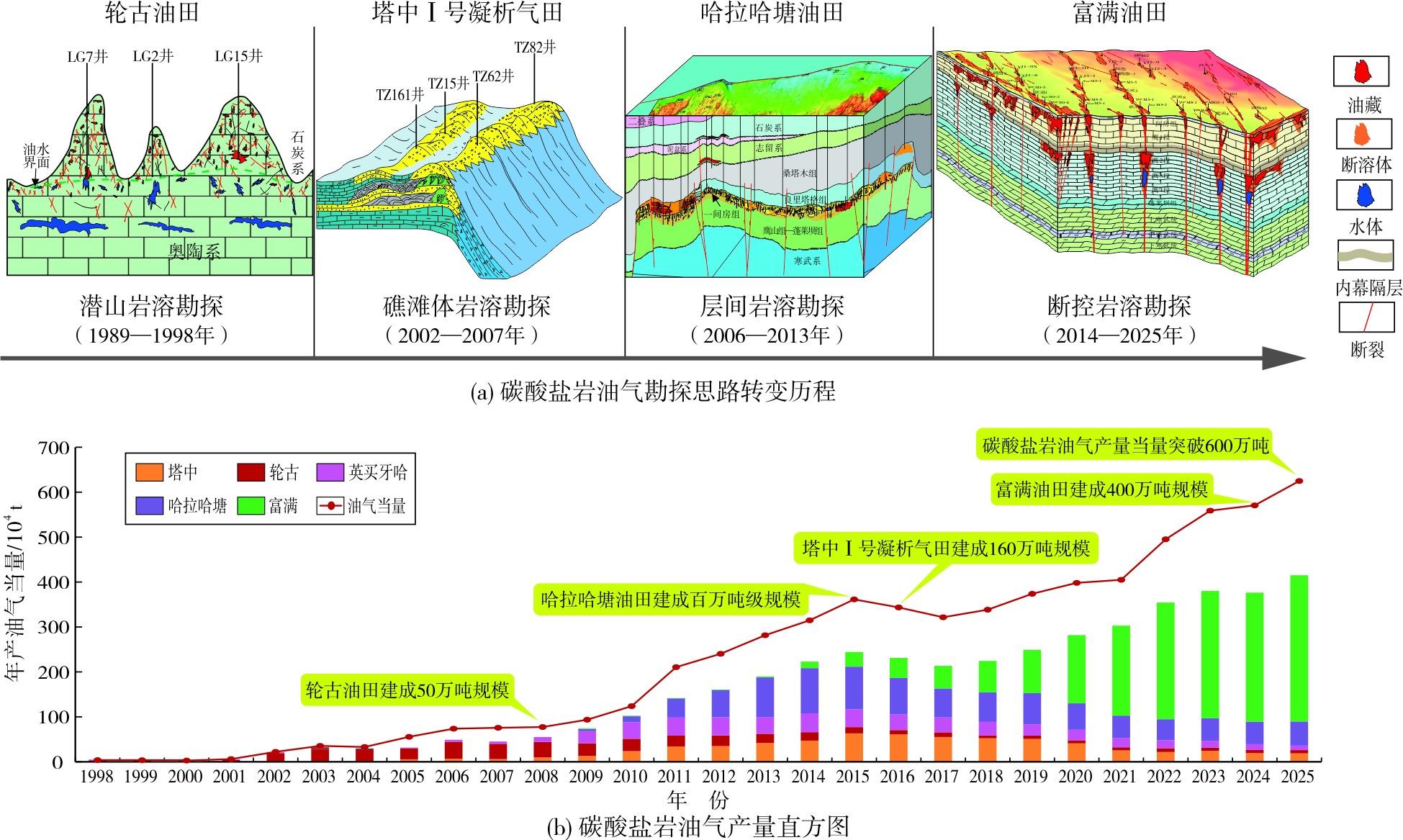
本文全面回顾了塔里木盆地碳酸盐岩勘探经历的“古构造→潜山岩溶→礁滩体岩溶→层间岩溶→断控岩溶”四次勘探思路重大转变的过程 [3],简要总结不同勘探阶段海相碳酸盐岩的油气地质条件,探讨了不同成藏组合的勘探成效、启示和前景,旨在为“十五五”期间多层系、多类型碳酸盐岩立体油气勘探提供实例借鉴,为海相碳酸盐岩增储上产提供理论技术支撑。
1 区域地质概况
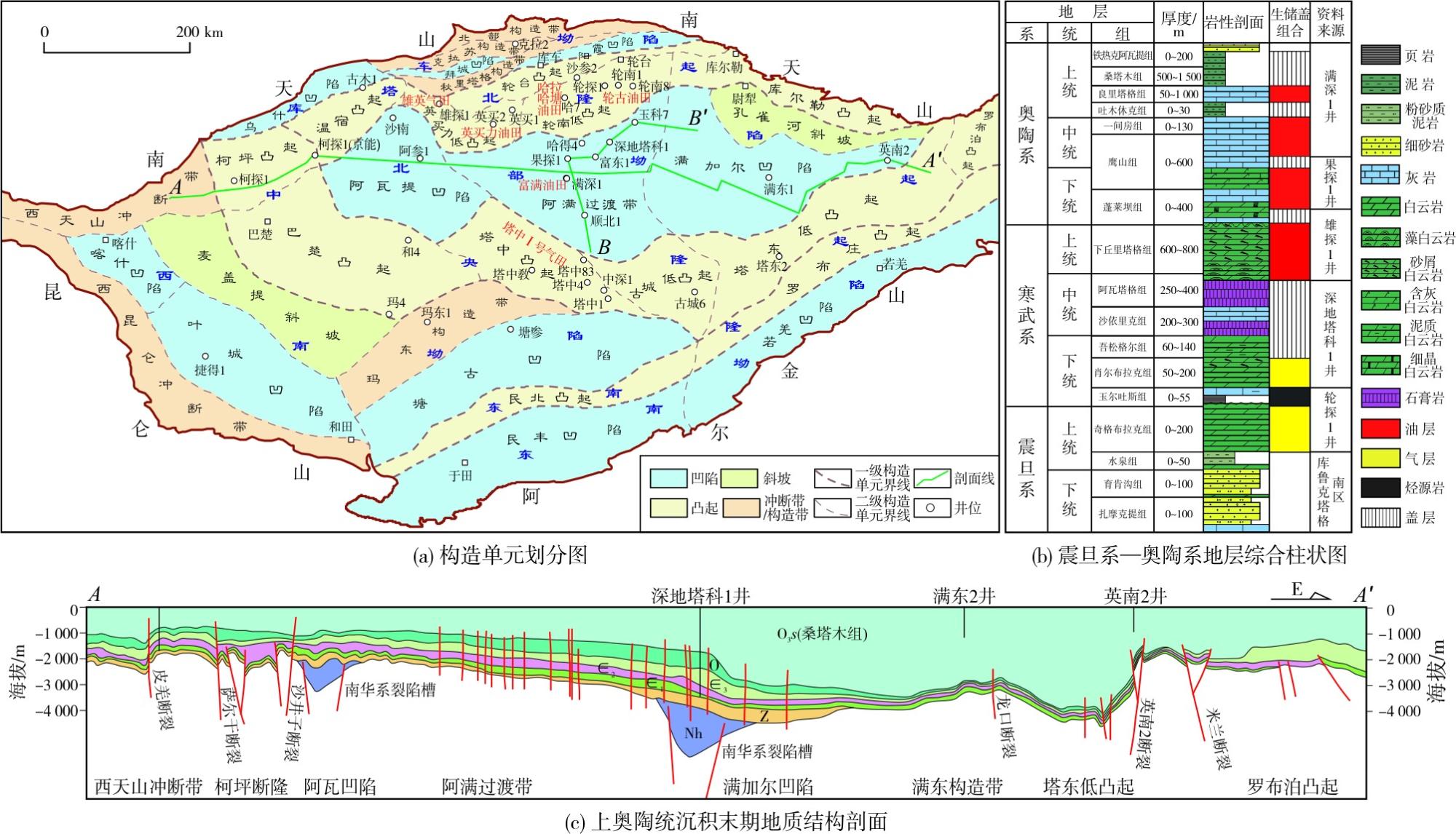
新元古代,受罗迪尼亚超大陆裂解影响进入拉张裂谷演化阶段,盆地基底开始接受盖层沉积,在伸展背景下形成南华系—震旦系裂谷盆地、坳陷盆地,震旦系发育碳酸盐缓坡沉积,岩性以潮坪相白云岩为主(图1b)。震旦纪末期,受柯坪运动影响,塔里木陆块整体抬升,南华系—震旦系遭受不同程度剥蚀,与上覆寒武系呈不整合接触(图1c),形成“西高东低、南隆北凹”古地貌。寒武纪—早奥陶世为稳定弱伸展背景下的小型克拉通盆地发育阶段:早寒武世发生大规模快速海侵,发育玉尔吐斯组海相主力烃源岩;中寒武世演化为镶边碳酸盐局限台地沉积,发育沙依里克组—阿瓦塔格组膏盐岩;晚寒武世—早奥陶世演变为半局限台地—开阔海台地沉积,塔西台地发育分布广泛、多期叠置的高能丘滩体。中—晚奥陶世,在南天山洋俯冲与昆仑地块碰撞共同作用下,塔里木克拉通由拉张转变为挤压环境,构造沉积格局由“东西台盆分异”逐渐向“南北隆坳相间”过渡:早奥陶世以局限台地沉积环境为主,主要发育粉—细晶白云岩、颗粒灰岩、云灰互层;中—晚奥陶世沉积环境由开阔台地向陆棚—盆地过渡,发育灰岩、泥灰岩及泥岩;晚奥陶世晚期发育巨厚的桑塔木组泥岩,覆盖于碳酸盐岩之上[5-8]。受加里东期—喜马拉雅期构造运动的影响,台盆区发育系列规模不等的断裂体系,最典型的是塔北隆起高角度压扭走滑断裂,以网状“X”型共轭为主,平面走向呈NNE与NNW向菱形交切,断裂体系对潜山岩溶、台缘礁滩体岩溶、内幕层间岩溶、断控缝洞体等碳酸盐岩储层具有重要改造作用。
根据区域性“源-断-储-盖”配置关系,将台盆区深层—超深层海相碳酸盐岩分为上、中、下3套成藏组合。上组合指源上第3套区域储盖组合,以中奥陶统一间房组灰岩、良里塔格组礁灰岩为主要储层,上奥陶统桑塔木组泥灰岩为区域性盖层,以哈拉哈塘油田为代表。中组合指源上第2套区域储盖组合,以上寒武统下丘里塔格组白云岩、下奥陶统蓬莱坝组白云岩、鹰山组白云岩和灰岩为主要储层,中奥陶统致密灰岩、泥灰岩作为盖层,以雄英气田、果探1油藏为代表。下组合指近源/源内第1套区域储盖组合,以震旦系奇格布拉克组白云岩、下寒武统肖尔布拉克组—吾松格尔组白云岩为主要储集层,中寒武统膏盐岩为区域性盖层,以轮探1油藏为代表。
2 勘探进展与成效
2.1 上组合(中—上奥陶统)勘探成效
2.1.1 第一次勘探思路重大转变:从古构造到古潜山岩溶勘探(1989—1998年)
1988年轮南1井在奥陶系试获工业油气流后,按碳酸盐岩古潜山构造油气藏勘探的思路在英买1、塔中1和英买2背斜构造上获得油气发现,但随后为整体解剖轮南背斜部署的14口探井,呈现油井、水井、干井相邻,高、中、低产井间互,结果是有发现、无储量、难建产。由于碳酸盐岩储层的非均质性极强,二维地震难以开展有效的储层预测,因此三维地震勘探势在必行。1998年,轮南8井区率先部署了窄方位三维地震70 km2,发现了洞穴的“串珠状”反射特征,发展形成了叠后时间偏移处理、喀斯特古岩溶地貌恢复、“串珠”洞穴预测技术。明确不整合潜山岩溶储层纵向分层、横向分带的特征,提出“残丘控油,沟谷控水”的地质认识——残丘就是圈闭、沟谷是圈闭的闭合线[10],创新形成了古岩溶地质学理论,以此为指导,发现了轮古西、桑塔木断垒和桑南西高产区块,探明了轮古亿吨级大油气田。
2.1.2 第二次勘探思路重大转变:从潜山岩溶到礁滩体岩溶勘探(2002—2007年)
1996—1997年,借鉴轮南潜山岩溶勘探经验,塔中奥陶系勘探从潜山高部位向斜坡区转移,在“逼近油源、逼近近源储盖组合、逼近断裂带”的勘探思想指导下,对塔中I号断裂带发育局部构造的塔中24、塔中26、塔中44、塔中45井区探索均取得成功。但受大沙漠地震技术和碳酸盐岩储层改造技术制约,无法开展地震储层预测,未能实现高产稳产,勘探陷入停滞。2002年,针对塔中奥陶系实施了塔中16区三维地震,刻画出上奥陶统良里塔格组沉积时沿塔中Ⅰ号高陡断裂坡折带发育台地边缘礁滩复合体,发现了我国最早的珊瑚-层孔虫造礁群落[11]。发展形成了大沙漠三维地震采集、叠前时间偏移处理、井震礁滩体层序对比、叠后多属性储层预测与刻画技术[11-12],逐步建立了礁滩复合体纵向多旋回叠置、横向多期次侧向加积沉积模式,提出“小礁大滩,一滩一藏,多期充注,储层控油”整体含油气的地质认识,明确塔中Ⅰ号坡折带东西长约220 km的范围整体含油气,发现和探明了良里塔格组亿吨级礁滩型凝析气田,累计探明地质储量天然气约1 000×108 m3、凝析油约6 000×104 t。
2.1.3 第三次勘探思路重大转变:从礁滩体岩溶到层间岩溶勘探(2006—2013年)
由于潜山岩溶型和礁滩型储层分布相对有限,因此扩展碳酸盐岩勘探领域成为必然。2006年,研究发现塔中下奥陶统鹰山组顶面存在不整合,塔北中奥陶统一间房组也发现了沉积间断,三维地震剖面上沿不整合面存在“串珠状”缝洞体。部署的塔中83井在下奥陶统鹰山组获得发现,哈6区块一间房组层间岩溶获得重大突破[13]。提出了层间岩溶多成因叠加改造,缝洞储集体大面积发育的地质认识,建立了“整体含油、局部富集、原地生成、网状立体运移”的准层状油气成藏模式[14]。同时攻关叠前时间偏移处理和缝洞体反演与定量雕刻技术,地震资料品质和储层预测精度大幅提升。在层间岩溶理论的指导下,发现和探明了塔中北斜坡鹰山组、英买2、哈拉哈塘等大中型油田,累计探明地质储量石油超4×10⁸ t、天然气3 300×108 m3,推动碳酸盐岩年产油气当量踏上300×104 t新台阶[15]。
2.1.4 第四次勘探思路重大转变:从层间岩溶到断控岩溶勘探(2014—2025年)
2014年开始,得益于三维地震技术的进步,系统揭示了共轭走滑断裂带的分布,建立的“层间岩溶+走滑断裂”二元控藏模式成功指导了哈拉哈塘油田的勘探开发,推动“走滑断裂控储成藏”理论体系趋于成熟。走滑断裂带内大型缝洞体构成优质储集空间[16],形成裂缝型、缝洞型及溶断型等多类储集组合,同时走滑断裂是沟通深部寒武系烃源岩与上覆储层的关键垂向通道,控制了油气富集空间。断控型油气藏兼具圈闭类型特殊、油柱高度大、原油品质优、单井产能高“四高一特”的优势。2020年,阿满过渡带的满深1井在奥陶系一间房组测试日产油约600 m3、气约40×104 m3,创下断控油藏埋深与单产双纪录[17],填补了塔北—塔中鞍部区域的勘探空白。走滑断裂“岩相-断裂-岩溶”三元耦合的控储机制与“源-断-储-盖”四元联控的成藏模式明确了走滑断裂“控储、控藏、控富”的核心地位。富满油田已累计提交三级油气地质储量超10×108 t油当量,年油气产量突破300×104 t,成为全球首座埋深逾8 000 m的断控油气田,成功开创了超深层碳酸盐岩效益勘探新范式。
2.2 中组合(上寒武统—下奥陶统)重大突破
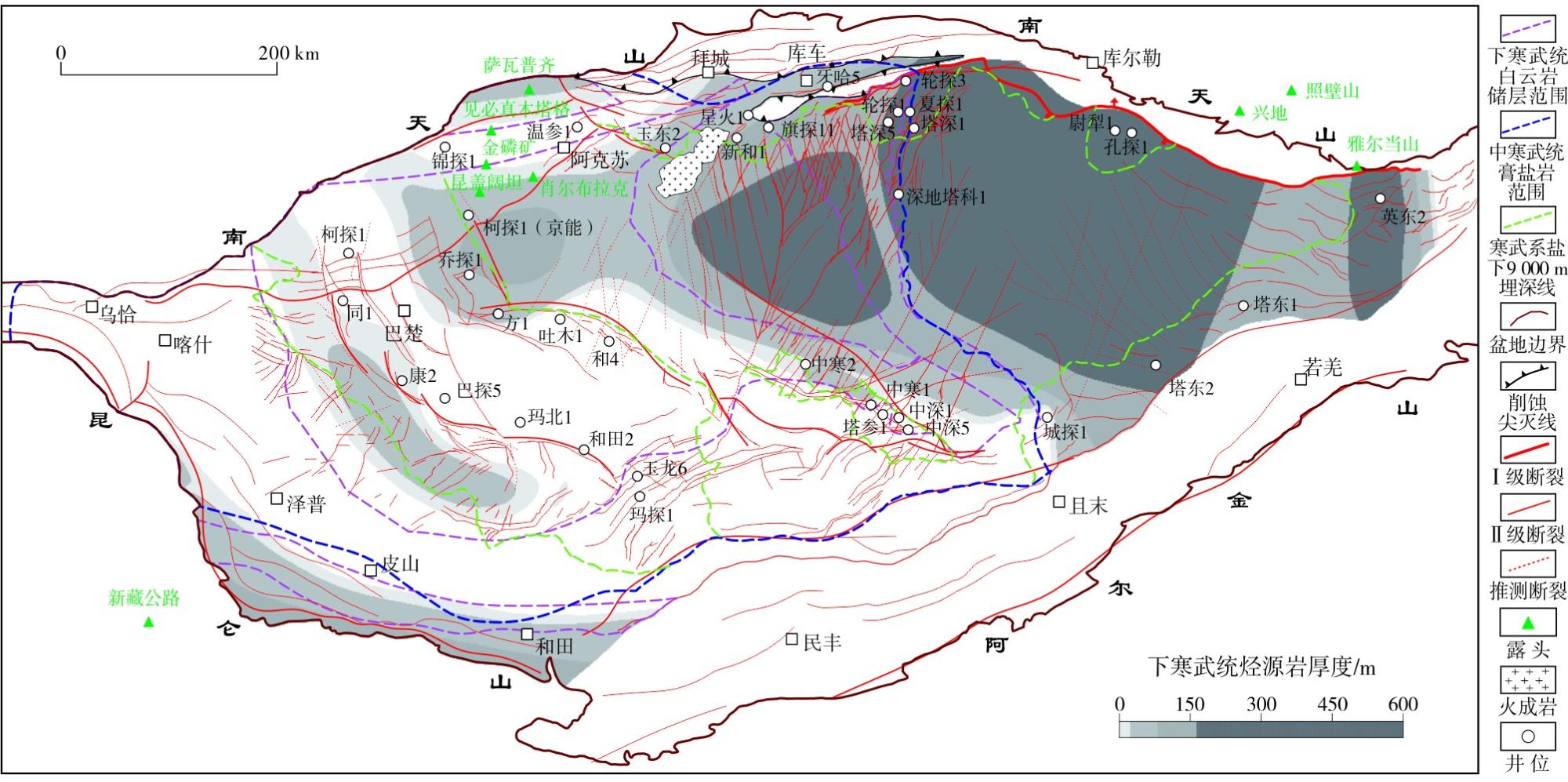
在近四十年的勘探实践中,碳酸盐岩勘探实现由“古隆起控油、斜坡富集”向“走滑断裂控藏”的总体转型,形成了高密度三维地震采集、微弱断裂识别、圈闭评价等勘探配套技术体系。深层—超深层海相碳酸盐岩油气勘探的每一次突破都与地质认识的提高与技术创新密不可分:对于轮古地区等复杂潜山岩溶区,岩溶残丘控富机理的认识,以及古地貌恢复技术、窄方位三维地震“串珠”精细雕刻技术是勘探突破的关键;对于塔中礁滩体岩溶区,古隆起是长期油气运移指向区,高频旋回暴露溶蚀成储、小礁大滩、多期叠置、带状分布一滩一藏的认识,以及大沙漠区三维地震叠后多属性礁滩体刻画预测技术是塔中Ⅰ号坡折带凝析气藏发现的关键;对于以哈拉哈塘为代表的层间岩溶区,多期层间不整合控储层、古隆起斜坡控藏、小油藏大油田的认识,以及层间不整合识别方法、宽方位高密度三维地震储层反演与雕刻技术是大油田发现的关键;对于富满油田断控岩溶区,走滑断裂控储控藏[18-21]、通源断裂垂向运移、立体复式成藏模式[22-25]的认识,以及走滑断裂精细刻画与表征技术[26]是高效建产的关键。上述这些地质认识构建起适配我国古老叠合克拉通盆地的超深层海相碳酸盐岩油气理论体系。然而,前四次思维革命都是以上组合奥陶系灰岩为主体,震旦系—下奥陶统中、下组合巨厚的白云岩层系仅零星突破。进入“十五五”,以果探1井为代表的奥陶系弱云化滩勘探领域的突破,以深地塔科1井为代表的万米深层寒武系的油气发现,开启了碳酸盐岩第五次思维革命的序幕,围绕“玉尔吐斯组多期生烃、碳酸盐岩多元控储、断裂垂向输导运聚”建立立体复式成藏模式,逐步构建起碳酸盐岩多层系、多类型、全深度立体成藏理论框架(图3)。
2.2.1 奥陶系深层弱云化滩新领域:果探1井勘探突破
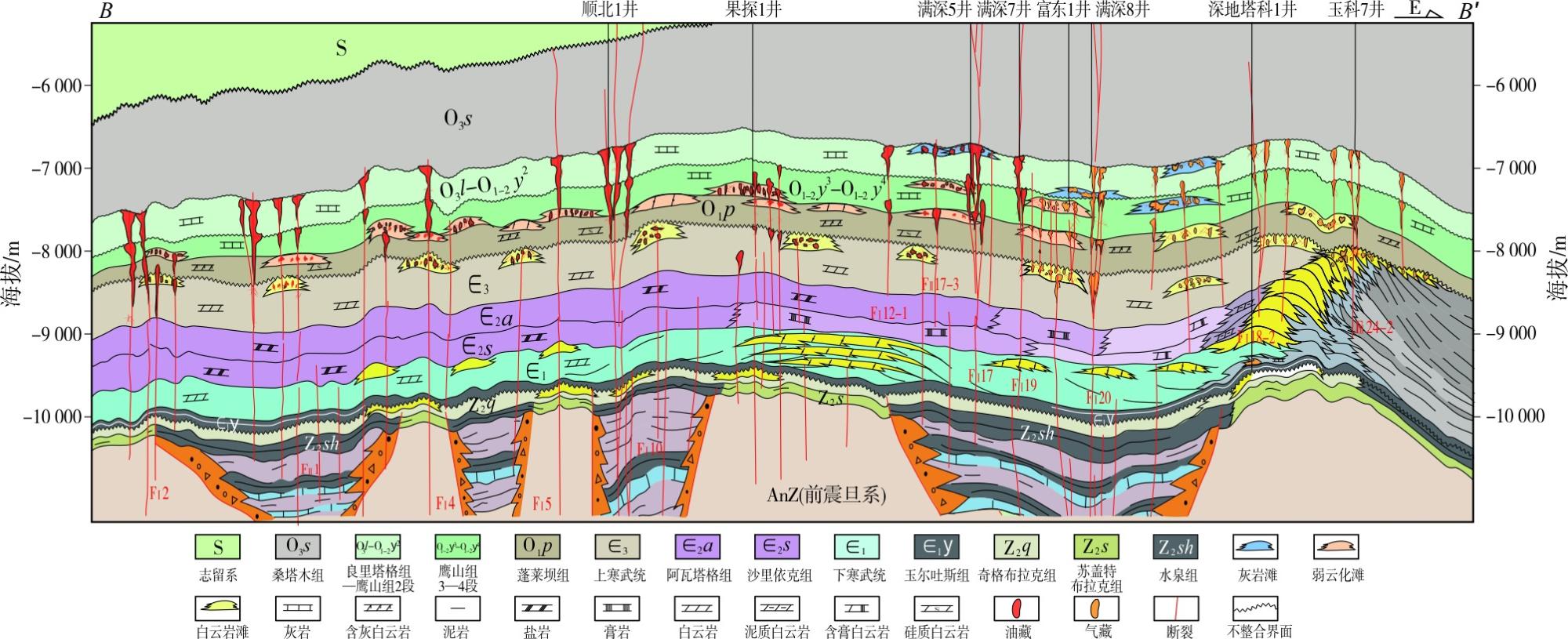
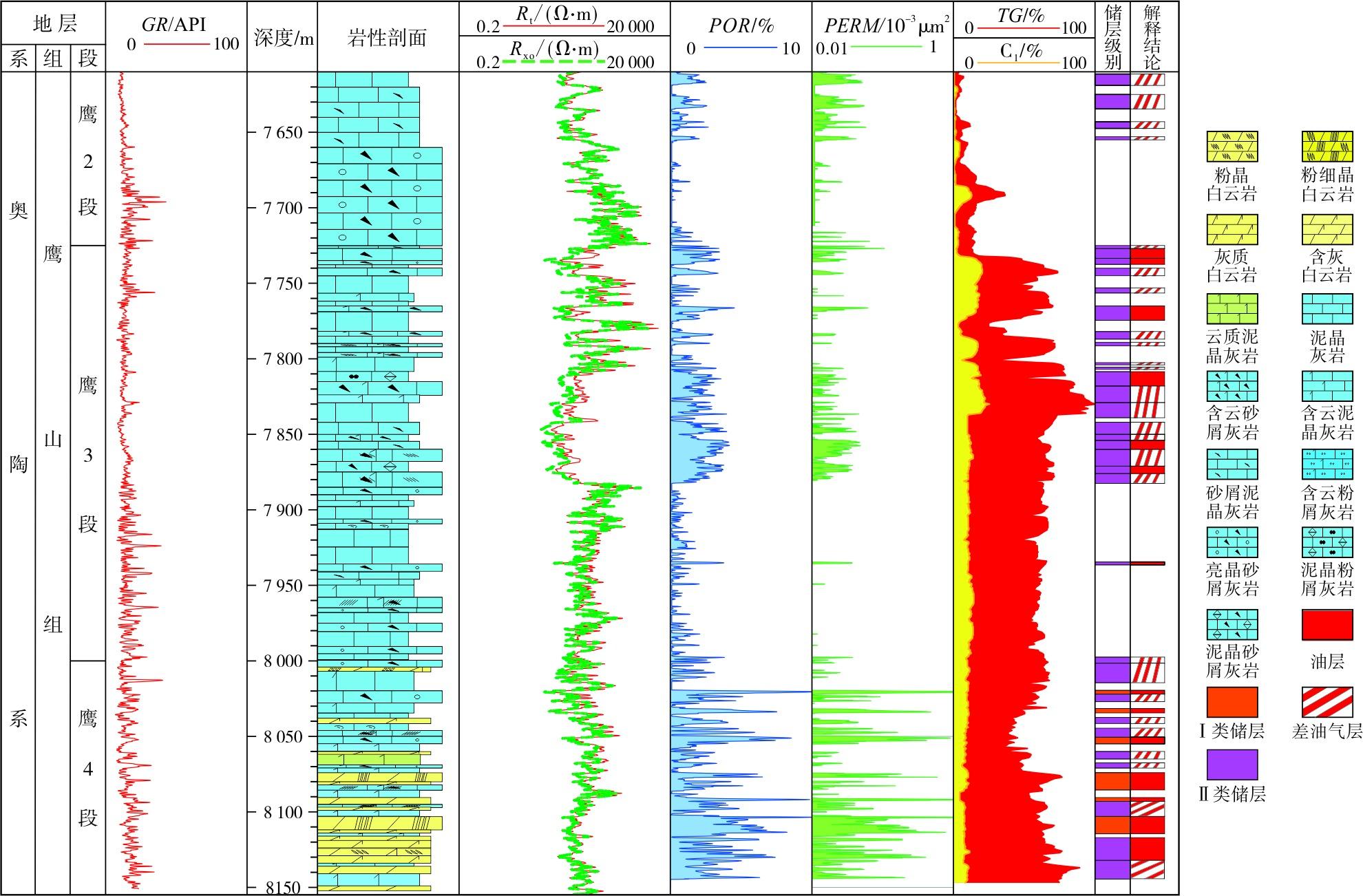
2025年,北部坳陷阿满过渡带的果探1井在鹰山组3—4段见气测显示69 m/12层,气测显示活跃,钻探过程中发生多段漏失,累计漏失钻井液2 600 m3,且井底放空1 m;对7 315~8 159 m井段进行常规测试获高产工业油流,证实奥陶系深层鹰山组3段—蓬莱坝组白云岩勘探潜力巨大(图4)。明确下奥陶统弱云化滩相白云岩经准同生期白云石化和断裂改造可形成规模储层,有利面积达1.3×10⁴ km3,坚定了“富满之下找富满”的信心。
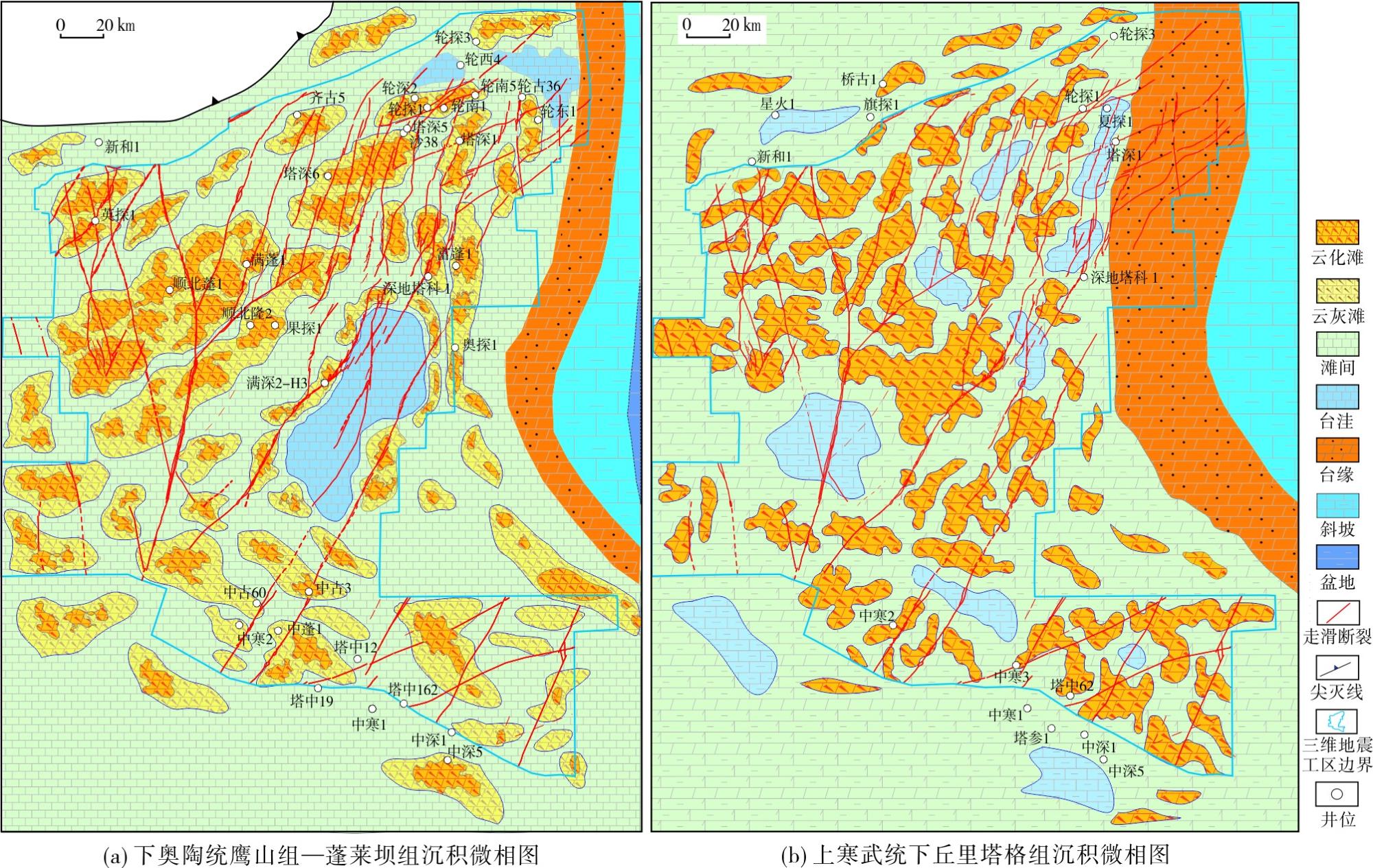
下寒武统玉尔吐斯组沉积时期塔里木台盆区继承了震旦纪晚期的裂陷沉积背景,发育陆棚斜坡到盆地相的烃源岩。烃源岩面积约22×104 km2,厚度为50~200 m,TOC平均值为10.1%,成熟度(Ro)介于1.4%~4.6%,为腐泥型优质烃源岩,生烃量达5 485×104 t。富满地区靠近生烃中心,整体位于玉尔吐斯组烃源岩厚值区,成藏条件有利[27]。沉积相研究表明,下奥陶统蓬莱坝组至鹰山组3段是连续继承型沉积演化序列,沉积期古地貌呈现“西高东低”的格局,发育开阔台地—半局限台地相沉积,岩石类型主要由粉细晶白云岩、灰质白云岩以及颗粒灰岩构成,不同岩性在纵向上频繁互层交替分布。盆地东侧海域与广海连通,水体交换通畅,属于典型开阔台地环境;靠近西部古隆起,水体封闭性持续增强,水循环受阻,逐步转变为半局限台地沉积环境(图5a)。受南北向水下坡折与古水动力共同控制,高能沉积环境沿着南北向优势通道稳定发育,台内白云石化滩整体呈长条带状南北向展布,单期独立滩体单层厚1~8 m,横向展布宽度可达3~10 km,多期旋回性滩体纵向相互叠置,构成厚层滩体复合体。受高频沉积旋回控制,发生阶段性暴露溶蚀,白云岩晶间孔、晶间溶孔发育,东西向古地貌不仅控制了地层厚度、沉积相带的平面分布范围,还直接决定了后期流体改造强度,为蓬莱坝组—鹰山组3段规模优质弱云化滩储层的形成奠定了基础。叠加加里东中期构造运动的影响,鹰山组3段顶面发育的不整合岩溶作用叠加断裂改造,形成了大型缝洞型优质储层。其上覆的鹰山组1—2段整体为致密灰岩,厚约300~400 m,断裂、缝洞储层不发育,可作为有效的直接盖层。因此,鹰山组1—2段致密灰岩与鹰山组3段—蓬莱坝组形成了一套有利的储盖组合。同时,区域内深大断裂、不整合面及输导层构成完整有效的三维空间输导体系,与三期主力生烃和三期油气充注相匹配,为富满油田及其深层规模成藏提供了重要条件[28]。
2.2.2 上寒武统白云岩岩溶新类型:雄探1井勘探突破
2023年,雄探1井在上寒武统下丘里塔格组内幕实现海相高产凝析油气重大突破,成为塔北西部寒武系首口获高产油气流的探井,证实塔北地区上寒武统白云岩具备规模优质储层与高效成藏条件。
晚寒武世塔里木盆地处于稳定克拉通构造演化阶段,构造平缓、活动较弱,碳酸盐台地大范围扩张,盆地整体发育进积型镶边台地沉积体系(图5b)。塔北西部主体长期处于水循环受限的半局限台地环境,下丘里塔格组发育沉积厚度大、连续性强的高能台内滩白云岩,总厚度稳定分布在400~900 m,经准同生期白云石化和不整合岩溶作用形成优质储层,有利面积达1.8×10⁴ km2。受台地内微古地貌控制,厚层高能颗粒滩优势发育区位于坡折转换带,在平面上沿地貌转折带呈规模条带状展布,单期颗粒滩厚度普遍介于5~25 m,多期滩体纵向叠置连片。上寒武统白云岩储层遵循“高能滩相控基础、层间岩溶扩储集空间”的耦合发育模式,滩体与岩溶作用叠合区域形成大面积连片优质孔洞型白云岩储层。高能滩以砂屑、鲕粒白云岩为主,原生粒间孔隙发育,基质孔隙度普遍介于3%~8%,后经多期层间岩溶选择性改造,溶蚀孔洞大量发育,孔隙度普遍可达6%~12%。塔北西部上组合受烃源岩生烃演化、断裂活动强度及期次、膏盐岩盖层分布等影响,油气沿断裂垂向+白云岩横向输导,在主干断裂、断裂间和台缘带上差异聚集成藏,形成断控油藏、断裂间白云岩岩性油气藏,是下一步塔西台地上寒武统白云岩油气勘探的核心目标。
2.3 下组合(寒武系盐下)油气发现
2012年,位于塔中凸起的中深1井钻遇寒武系盐下肖尔布拉克组优质储层,并试获工业油气流,首次在塔中寒武系盐下获得战略性突破。2019年以丘滩体模式为指导、以找膏下台缘为思路部署轮探1井,钻揭下寒武统玉尔吐斯组优质烃源岩18 m,TOC介于2.4%~18.5%、平均值为10.1%。证实震旦系奇格布拉克组白云岩风化壳岩溶储层与上覆玉尔吐斯组泥岩构成的储盖组合和沙依里克组—吾松格尔组白云岩与上覆阿瓦塔格组膏岩构成的储盖组合,并在盐下沙依里克组—吾松格尔组测试获高产工业油气流。轮探1井的成功证实了近源勘探方向的正确性[29-30]。寒武系盐下埋深大、沉积特征认识不清、成岩改造强等复杂因素,导致油气勘探面临有发现但难以规模展开的困境。
2025年,我国首口万米科探井深地塔科1井钻探证实了塔里木盆地万米深层发育寒武系优质烃源岩,揭示过成熟干酪根裂解气为深层天然气主要成因类型,液态烃大量裂解的温度为190 ℃,据此预测盆地9 600 m以浅具备规模原生液态油藏勘探潜力。证实万米深层发育规模优质白云岩储层,揭示了“早期白云石化保孔、晚期改造增孔、深埋抗压保存”是万米深层有效碳酸盐岩储层孔隙形成与保持的主要机理[31]。首次在万米深层寒武系肖尔布拉克组获得天然气发现,证实万米深层具备油气富集条件,显著拓展了碳酸盐岩勘探深度的下限。
勘探实践明确了寒武系盐下具备油气规模成藏的三大有利地质条件,增强了万米深层寻找原生大气藏的信心[32-33]:①烃源岩分布规模大,物质基础丰富。北部坳陷及周缘玉尔吐斯组的生烃中心泥岩厚度达10~40 m,面积约20×104 km2,富满地区推测厚度达175 m,现今成熟度为1.0%~4.4%,主体处于过成熟阶段,生烃强度超过450×104 t/km2的烃源岩分布面积约4.5×104 km2。②塔里木盆地具有典型“冷盆”以及“早期持续浅埋,晚期快速深埋”的特征,决定了超深层烃源岩处于高—过成熟阶段,生烃能力强,喜马拉雅期以天然气为主,可大规模聚集成藏。③台盆区含油气系统具有近源垂向叠置发育的特征。根据规模烃源岩、非均质准层状白云岩储层、中寒武统有利盖层分布、断裂发育特征等要素,厘定寒武系盐下三大有利勘探领域:①塔北地区震旦系风化壳白云岩岩性气藏。优质烃源岩与优质储层叠合有利面积1.6×10⁴ km2,主体埋深介于9 000~11 000 m,天然气资源量约2×10¹² m3。 ②塔北地区下寒武统前积体岩性气藏。下寒武统前积体顶部滩体白云岩与中寒武统膏盐岩有利储盖组合面积约7 500 km2,埋深7 400~10 600 m,估算天然气资源量约3×10¹² m3。③塔中中西部下寒武统肖尔布拉克组潮缘丘滩型白云岩构造-岩性油气藏。埋深9 000 m以浅有利勘探面积约7 500 km2,具备万亿方资源前景(图6)。
3 理论技术进展与启示
塔里木盆地深层—超深层海相碳酸盐岩历经四十年勘探实践,完成了“古构造→潜山岩溶→礁滩体岩溶→层间岩溶→断控岩溶”的四次思路转变,配套形成了沙漠超深层高精度物探、万米极端环境钻完井、缝洞储层定量评价等成套勘探技术[34]。为了拓展“十五五”盐上、盐下白云岩勘探新领域,下面从基础地质理论认识、风险勘探机制、地震-地质一体化、工程技术4个维度讨论超深层碳酸盐岩油气勘探理论技术进展及启示。
3.1 油气地质认识创新引领勘探方向
传统海相碳酸盐岩勘探秉持的“古隆起高部位控油、斜坡浅层富集、7 000 m为液态烃死亡线”三大固有认知,制约了盆地坳陷区、万米深层、内幕白云岩等新领域探索。依托深地塔科1井、果探1井等勘探突破,持续开展基础地质理论创新,引领第五次勘探思路的重大转变,构建多层系、多类型、全深度立体成藏理论框架。
塔里木盆地历经多期超大陆裂解-聚敛旋回,多旋回构造沉积演化控制全区生储盖空间配置与油气差异化富集。上、中、下三套储盖组合立体复式成藏认识推动勘探层系由奥陶系浅层向寒武系盐下万米深层纵向延伸。针对上组合(中—上奥陶统),提出以断控、层间、礁滩、潜山4类缝洞油气藏为核心[35],并将其作为当前主力增储领域;针对中组合(上寒武统—下奥陶统),创新弱云化滩相白云岩成储理论,明确半局限台地高能颗粒滩经准同生白云石化、断裂改造可形成连片孔洞储层;针对下组合(寒武系盐下),厘清震旦系风化壳、下寒武统肖尔布拉克组丘滩体两套盐下储盖组合,提出“早期白云石化保孔、晚期断裂溶蚀增孔、持续低温冷盆抗压保储”3阶段储层演化模式,彻底突破“万米深层无工业油气”理论禁区,拓展了我国油气勘探深度下限。
多旋回叠合盆地多期生烃-多期充注差异成藏理论为立体勘探选区提供核心理论依据。受“早期浅埋、晚期快速深埋”冷盆演化特征控制,下寒武统玉尔吐斯组腐泥型烃源岩经历加里东、海西、喜马拉雅3期生烃高峰,油气沿断裂、不整合、滩相输导层形成3期充注。加里东期以油相充注为主,海西期油气大规模调整富集,喜马拉雅期深部液态烃裂解、浅层气侵,造成盐上、盐下流体相态分异:盐上奥陶系以油藏、凝析气藏为主,盐下寒武系以干气藏为主,形成“纵向分层、横向分带、断裂分异”的复式油气分布格局。
3.2 风险勘探推动新区新领域快速突破
一是构建“基础地质评价前置”的风险筛选机制。设立盆地超深层碳酸盐岩专项基础研究,持续开展构造-沉积演化、烃源岩展布、储层发育规律、断裂系统演化攻关,编制全盆地震旦系—奥陶系岩相古地理、源储盖叠合图件,划定三级风险勘探目标区带,优先部署资源潜力大、地质条件相对清晰的战略突破口,降低盲目钻探风险。针对阿满过渡带走滑断裂空白区、寒武系盐下万米禁区,提前开展野外露头、钻井岩心、物理模拟综合研究,形成综合评价报告后再部署风险探井,满深1井、深地塔科1井、果探1井均为预评价优选目标,实现“打一口、突破一个领域”的高效攻关成效。
二是建立跨专业、跨单位联合风险攻关专班。针对重大风险探井实行“一井一专班”动态跟踪,实时同步钻井、录井、测井、测试资料,动态修正地质模型、优化井轨迹与试油方案。在果探1井钻探过程中,专班实时跟踪超深井漏失、放空显示,及时调整测试井段,最终获高产工业油流,快速落实富源—果勒中组合弱云化滩白云岩规模增储区。
三是建立风险勘探容错与成果转化激励机制。针对超深层勘探高投资、高不确定性的特点,设立风险勘探专项经费,区分商业发现井与地质发现井评价标准,允许纯地质认识突破、无商业产能型探井立项。同时建立理论、技术、勘探成果快速转化通道,将风险井形成的地质新认识、配套攻关技术直接应用于常规滚动勘探,实现“一口风险井突破,一片区带增储”,顺北、富满两大超深层油田均由风险探井带动整体规模开发。
3.3 地震-地质一体化精细落实目标
深层—超深层碳酸盐岩埋深普遍达到7 500~11 000 m,地震反射能量弱,走滑断裂断距小、缝洞储层非均质性极强,单一地质研究或地震解释均无法精准刻画储层,长期攻关形成的“岩石物理标定—高精度地震采集—全波场成像处理—多维度地质解释—动态井震迭代”地震-地质一体化技术体系,解决了弱断裂、小缝洞、深层内幕储层难识别的问题。
采集上创新大沙漠区高密度宽方位三维地震技术,优化观测系统覆盖次数、偏移距与方位角,压制沙漠沙丘散射噪声,提升7 500 m以深奥陶系内幕地层反射信噪比,实现低序级走滑断裂空间展布精准成像。处理环节研发深层弱信号保真全波场偏移成像算法,针对超深层高温高压、地层速度剧烈变化难题,建立寒武系—奥陶系碳酸盐岩分层速度模型,消除膏盐岩、巨厚泥岩带来的速度畸变,大幅提升小型缝洞储集体成像精度[37]。解释端构建井-震一体化储层定量评价平台,依托岩心、薄片、测井岩石物理实验建立缝洞储层地震响应模板,实现断裂破碎带、孔洞型储层平面定量刻画,支撑富满油田数千平方千米有利区带精细圈定。
井-震动态迭代机制贯穿勘探全流程。新探井完钻后,快速利用新井分层、储层、断裂数据修正地质模型与速度场,更新全区地震解释成果,同步优化后续井位部署。以富满油田为例,满深1、满深3、满深7井钻探后,多次迭代更新走滑断裂系统平面分布图,新增FⅠ17、FⅠ19等多条富油断裂带,含油面积由初始的4 000 km2修正至10 000 km2以上,充分体现地震-地质一体化对勘探目标的动态优化价值。
3.4 工程技术迭代突破勘探禁区
超深层钻探面临高温(160~200 ℃)、高压、巨厚膏盐层、破碎缝洞地层漏失、井壁失稳等多项工程难题,常规钻完井、储层改造技术完全无法适配。通过多专业联合攻关形成万米超深层配套工程技术体系,打通深层资源动用工程瓶颈。
一是超深层安全高效钻完井配套技术。研发抗200 ℃高温钻井液、高密度防漏承压堵漏体系,针对奥陶系缝洞段、寒武系膏盐层形成分级承压堵漏工艺,解决果探1井、深地塔科1井等大规模钻井液漏失难题,将单井漏失量控制在合理区间;创新高强度耐高温套管、防腐固井水泥浆体系,实现万米深井全井段有效封固,隔绝地层流体、保障井筒长期完整性,为后期储层改造、长期生产提供井筒基础[38]。
二是超深层碳酸盐岩储层精准改造技术。针对基质致密、缝洞分布非均质的断控型储层,形成“分段精细射孔+多级暂堵转向酸压”工艺,依托走滑断裂破碎带应力差异引导酸液优先溶蚀储集空间,大幅提升单井有效泄油体积。深地塔科1井经储层改造后获日产3×10⁴ m3低产工业气流,证实该套工艺已初步适配盐下万米深层白云岩储层改造需求。
三是超深井动态测试与储层评价技术[39]。研发耐高温高压井下测试工具,建立超深层流体相态、温压系统现场实时评价流程,可精准判别油藏、凝析气藏、干气藏类型,为区带成藏规律研究、储量核算提供第一手流体数据,果探1井、满深1井的高产测试均依托该套技术完成系统评价。
地质认识指导工程技术攻关方向,工程突破验证、完善油气地质理论,二者协同持续拓展超深层勘探边界。深地塔科1井万米钻探工程突破,直接证实万米深层具备有效储层与油气聚集条件,刷新全球古老碳酸盐岩勘探深度纪录,为国内、全球叠合盆地深层油气勘探提供工程范本。
4 攻关方向及勘探前景
塔里木盆地碳酸盐岩大量勘探目标已迈入万米超深层范畴,勘探过程面临多重瓶颈。地层经历多期构造运动叠加改造,古老层系地震波衰减强烈,多次波干扰突出,南华系—寒武系深部成像品质受限,制约了古构造格局与烃源岩展布的精细落实。不同区带白云岩储层受沉积、白云石化、断裂-岩溶改造的差异化控制,储层非均质性极强,台内滩、槽缘滩、弱云化内幕储层的地震识别与定量预测难度大[40]。寒武系膏盐岩空间形态变化剧烈,盐体边界刻画精度不足,盐岩对储层演化、油气保存的控制机制仍需深化,盐下优质储-盖组合的综合评价难度较高。
4.1 理论技术攻关方向
实现勘探高质量发展需要依靠地质理论认识的突破与物探、工程技术协同攻关。地质认识上持续深化震旦系—奥陶系构造-沉积演化与储层成因研究:准确落实震旦系—寒武系台内弱分异隆坳格局,加强奇格布拉克组“三台三洼”、肖尔布拉克组“四台三洼一低梁”古地理格局刻画,同步完善“岩相-测井相-地震相”响应图版,编制高精度岩相古地理图,支撑有利相带优选;厘清高频海平面旋回、成岩过程、流体-成岩作用对弱云化滩白云岩储层的控制机理,揭示优质储层的形成机制,完善古老碳酸盐岩储层成因理论体系。勘探技术上持续推进地震处理解释与工程技术联合攻关:强化深层地震成像,压制多次波,推进南华系精细处理,提升深部地层成像质量,刻画深部烃源岩分布;建立分类型、分区块白云岩储层定量预测技术,区分台内滩、槽缘滩、内幕弱云化储层的地震响应特征,实现差异化储层预测;精细识别寒武系盐岩边界,构建盐体-储层-盖层一体化定量评价流程,厘清膏盐层对油气成藏的控制作用,支撑超深层碳酸盐岩勘探目标的落实。
4.2 勘探领域及资源潜力
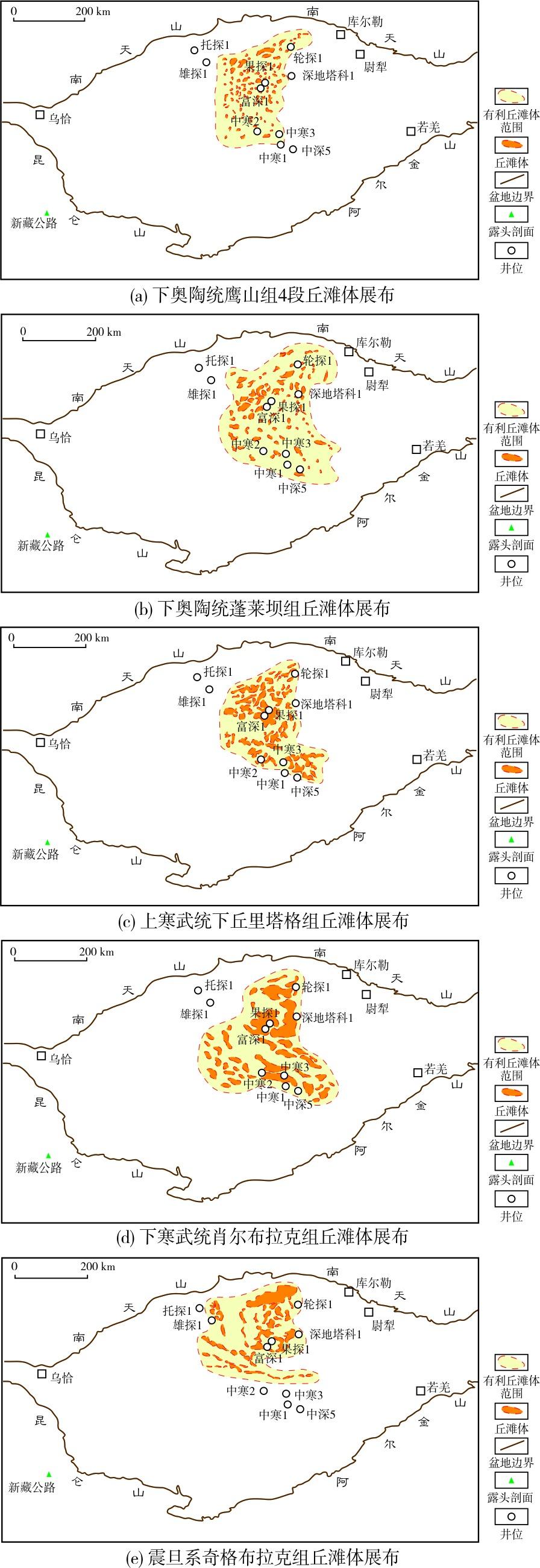
下古生界震旦系、寒武系、奥陶系深层—超深层碳酸盐岩具备雄厚的资源基础,多层系立体勘探格局已经成型。寒武系盐上,奥陶系内幕白云岩勘探领域:鹰山组3—4段弱云化滩白云岩储层沿富深、阿满呈南北向条带展布,有利区面积约1.9×10⁴ km2(图7a);蓬莱坝组由准同生白云石化叠加断裂改造形成规模储集体,有利区面积约1.3×10⁴ km2(图7b)。上寒武统下丘里塔格组厚层台内滩白云岩受控于准同生期白云石化与不整合岩溶,有利区面积约1.8×10⁴ km2,与蓬莱坝组白云岩共同构成中组合重点拓展阵地(图7c)。寒武系盐下,超深层肖尔布拉克组白云岩领域:塔北有利滩体分布面积约1.2×10⁴ km2、天然气资源量约3×10¹² m3,塔中有利滩体分布面积约2 000 km2、天然气资源量约3 000×108 m3(图7d),是盆地天然气战略接替主战场。震旦系丘滩相白云岩领域储层以台内滩、槽缘滩相带为主,预测旗探—哈探—果勒台内滩总面积约9 800 km2,富满槽缘滩有利区面积约5 100 km2,为古老层系油气勘探开辟了新方向、新领域(图7e)。
5 结论
(1)塔里木盆地深层—超深层碳酸盐岩勘探经历“古构造→潜山岩溶→礁滩体岩溶→层间岩溶→断控岩溶”四次勘探思路的重大转变,指导勘探方向从古隆起走向古斜坡再走到古坳陷,推动了四次储量产量增长高峰,构建起古老叠合克拉通盆地的深层—超深层海相碳酸盐岩油气理论体系。
(2)果探1井、雄探1井、深地塔科1井证实盐上奥陶系鹰山组和蓬莱坝组、寒武系下丘里塔格组内幕白云岩,盐下寒武系肖尔布拉克组以及震旦系奇格布拉克组丘滩体均具备良好的成藏基础,第五次思维革命聚焦中、下组合,构建多层系立体勘探格局。
(3)震旦系、寒武系、奥陶系白云岩具备雄厚的资源潜力,基础地质理论认识、风险勘探机制、地震-地质一体化、工程技术四个维度的理论技术进展及勘探攻关启示,不断推进拓展深层—超深层海相碳酸盐岩勘探深度与空间维度。
(4)塔里木盆地碳酸盐岩勘探已迈入万米超深层范畴,勘探高质量发展需要依靠地质理论认识突破与物探、工程技术协同攻关,持续深化沉积-成储机理研究,攻关深层地震成像与储层预测技术,完善万米钻完井配套工艺,释放盐上、盐下超深层海相碳酸盐岩的油气勘探潜力。