
0 前言
混积碳酸盐岩作为陆源碎屑与碳酸盐组分交互沉积的特殊类型,其形成机制受构造活动、气候波动、海平面升降及物源供给等多因素联合控制[1]。浅海—滨岸环境是混积体系发育的主要沉积背景。例如:澳大利亚Brigadier组混积岩的形成与碎屑物源中断及水动力条件减弱密切相关,表现为碳酸盐岩与砂泥岩的韵律性交替沉积[1];苏北盆地金湖凹陷阜二段发育海侵作用主导的混积序列,其多期次沉积组合受构造活动与古气候波动的协同控制[2]。近年来,碳酸盐岩-碎屑岩潮坪互层模式被证实为混积潮坪发育的关键机制,其沉积相带空间展布呈现出显著的海平面升降响应特征,即海退期以碎屑潮坪占主导地位,海侵期则发育碳酸盐岩与碎屑岩混积潮坪[3]。层序地层学方法在混积体系研究中展现出独特的优势:杨玉芳[4]基于海相层序地层理论,揭示了塔里木盆地石炭系高位体系域礁滩相灰岩的储集空间分布规律,提出碳酸盐岩上倾尖灭体为有利勘探目标;Nikfard等[5]通过地震地层学与生物地层学的整合研究,阐明了伊朗Asmari盆地混积储层沉积的几何形态与海平面升降的耦合机制;伏美燕等[6]提出的混积强度四级划分方案,为地层对比与古环境重建提供了重要方法支撑,进一步揭示了构造活动与海平面变化对塔里木盆地巴麦地区石炭系混积层的联合控制作用。然而,当前混积碳酸盐岩研究仍存在一些显著局限:①传统方法多将混积体系与纯碎屑岩/碳酸盐岩层序割裂分析,导致海陆过渡带层序界面识别标准与沉积相带配置规律缺乏系统性对比,制约了混积层序等时格架的精细划分;②混积岩相组合的复杂性(如陆源碎屑与碳酸盐组分交互沉积)使得层序控沉积机理研究薄弱,传统层序模型难以合理解释混积体空间叠置样式的成因,特别是高频沉积旋回对混积岩相分异的控制机制尚未厘清,储层形成与层序演化的动态响应关系仍不明确。
塔里木盆地石炭系巴楚组生屑灰岩段作为塔中东部的重要勘探目的层,在中央主垒带多口钻井中显示良好气测异常。前人对于该领域的研究主要聚焦于石炭系混合沉积的地层展布[7-9]、沉积环境特征[10-13]及储层孔隙成因[14],层序地层研究相对薄弱且存在显著分歧。朱美衡等[15]将塔河地区石炭系划分为6个三级层序,认为巴楚组属海进体系域;崔金栋等[16]基于成岩层序地层学方法,将生屑灰岩段划分为单一的三级层序,识别出海侵体系域(开阔碳酸盐台地)和高位体系域(障壁海岸潮坪);康婷婷等[17]基于塔中2井区的研究提出生屑灰岩段属三级层序高位体系域,其下伏下泥岩段为海侵体系域。塔中东部巴楚组发育典型的碎屑岩-碳酸盐岩混积地层,当前对海陆过渡背景下生屑灰岩段的层序架构仍缺乏统一认识,导致沉积期充填演化规律与有利储集体发育相带分布特征不明确,这严重制约了对区域勘探开发潜力的准确评价。
本文基于6口钻井岩心(累计150 m)、500余片薄片资料,结合常规测井及地球化学数据,系统建立了塔中东部石炭系生屑灰岩段层序地层格架,通过沉积充填演化规律与成岩作用-层序耦合关系分析,揭示了高频旋回对混积潮坪岩相分异的控制机理。研究成果可为塔中东部石炭系勘探目标优选与开发潜力提升提供新的地质依据。
1 区域沉积背景
塔里木盆地位于中国西北部,面积约56×104 km²,是我国陆内油气勘探的重要领域。本文研究区位于中央隆起带塔中低凸起东部(图1)。中央古隆起形成于加里东中期,定型于海西早期,现今构造形态表现为志留系—泥盆系披覆潜山。志留纪之后,研究区经历区域性抬升剥蚀,导致志留系向东逐渐减薄至尖灭。石炭系及其上覆地层沉积于下古生界复式背斜之上,与下伏志留系呈角度不整合接触。本文通过印模法重建沉积古地貌,即将生屑灰岩段底面视为填平补齐界面(潜山周边仍存在局部地层缺失),通过地震解释获取石炭系底面与生屑灰岩段底面界面,计算获得石炭系底面至生屑灰岩段底面之间的残余厚度(即东河砂岩段与下泥岩段累计厚度),残余地层厚度越大指示古地形越低。受奥陶纪构造运动影响,石炭系生屑灰岩段沉积前的古地貌为东高西低,东部地层呈现差异剥蚀的特征[18]。如图1a所示,古地貌最高点位于研究区东侧潜山带邻近区域,而TZ25井区、TZ6井区及TZ4井区等3个现今正向构造带对应于当时局部低隆发育区。
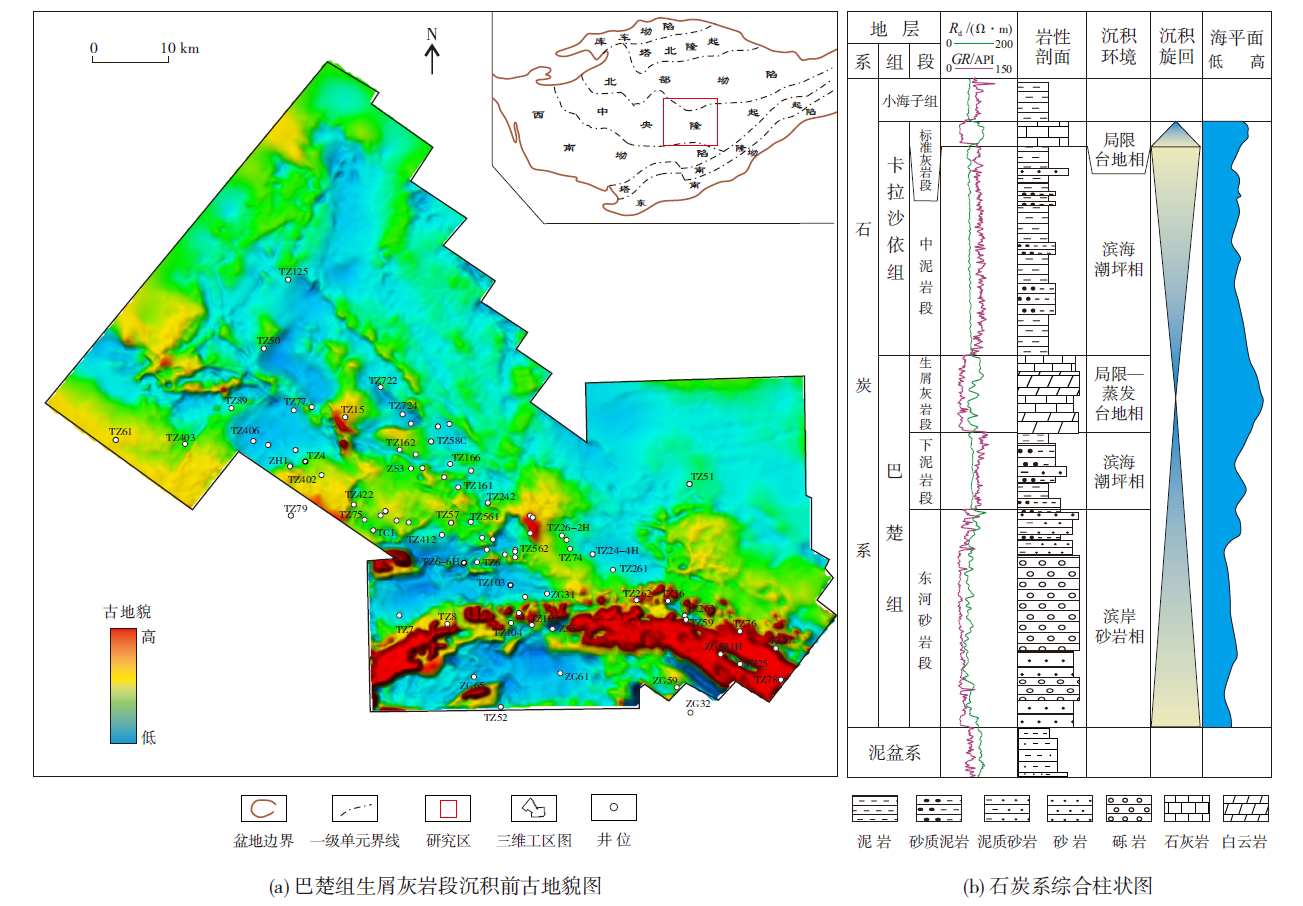
塔中东部石炭系发育多套碎屑岩-碳酸盐岩沉积旋回(图1b),其旋回结构受控于原型盆地构造格架、三级海平面波动及古气候周期性变化。第1岩性旋回自下而上依次由巴楚组的东河砂岩段(碎屑岩)、下泥岩段(碎屑岩)和生屑灰岩段(碳酸盐岩)构成(图1b)。生屑灰岩段形成于早石炭世晚期。在塔中大部分区域经历填平补齐作用后,海水自西南方向持续侵入,随着水深增加,陆源碎屑物质输入显著减少,沉积水体的清洁度显著改善,为生物繁育和碳酸盐工厂的形成提供了有利条件。在这种海陆过渡背景下形成混积碳酸盐岩地层,厚度分布在29~37 m之间。第2岩性旋回由卡拉沙依组的中泥岩段与标准灰岩段构成,各层系间岩性-电性特征差异显著(图1b)。
巴楚组生屑灰岩段与下泥岩段、下伏东河砂岩段及上覆中泥岩段共同构成一个完整的三级层序(图1b)。从沉积演化来看,东河砂岩段以浅灰色砾岩、细砂岩为主,发育滨岸砂岩相,粗粒沉积反映海退期陆源输入充足、水体较浅;随着海平面向陆推进及气候干热化,下泥岩段过渡为棕红色泥岩与泥质粉砂岩,代表滨海潮坪相细粒沉积;生屑灰岩段形成于海侵鼎盛期,陆源碎屑供应中断,发育碳酸盐台地相颗粒灰岩与白云岩组合,指示水体清澈且能量适中;中泥岩段的紫红色泥岩反映水体变浅的潮坪环境,而标准灰岩段的石灰岩沉积则标志新一轮海侵启动。整体上,东河砂岩段—下泥岩段—生屑灰岩段—中泥岩段—标准灰岩段的相序演化揭示水体加深—变浅—再加深的旋回特征。
2 岩石学特征
2.1 岩石类型

图2 塔中东部巴楚组生屑灰岩段典型岩心及薄片特征Fig. 2 Characteristics of typical cores and thin sections of the bioclastic limestone memberof the Carboniferous Bachu Formation in eastern Tazhong area, Tarim Basin |
2.2 岩性序列特征
塔中东部生屑灰岩段的岩石类型分布表现出明显的垂向分段、平面分带特征。
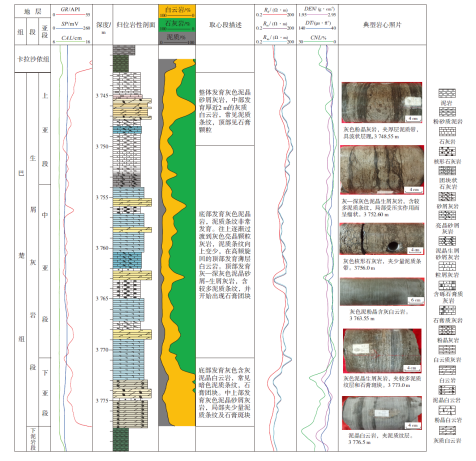
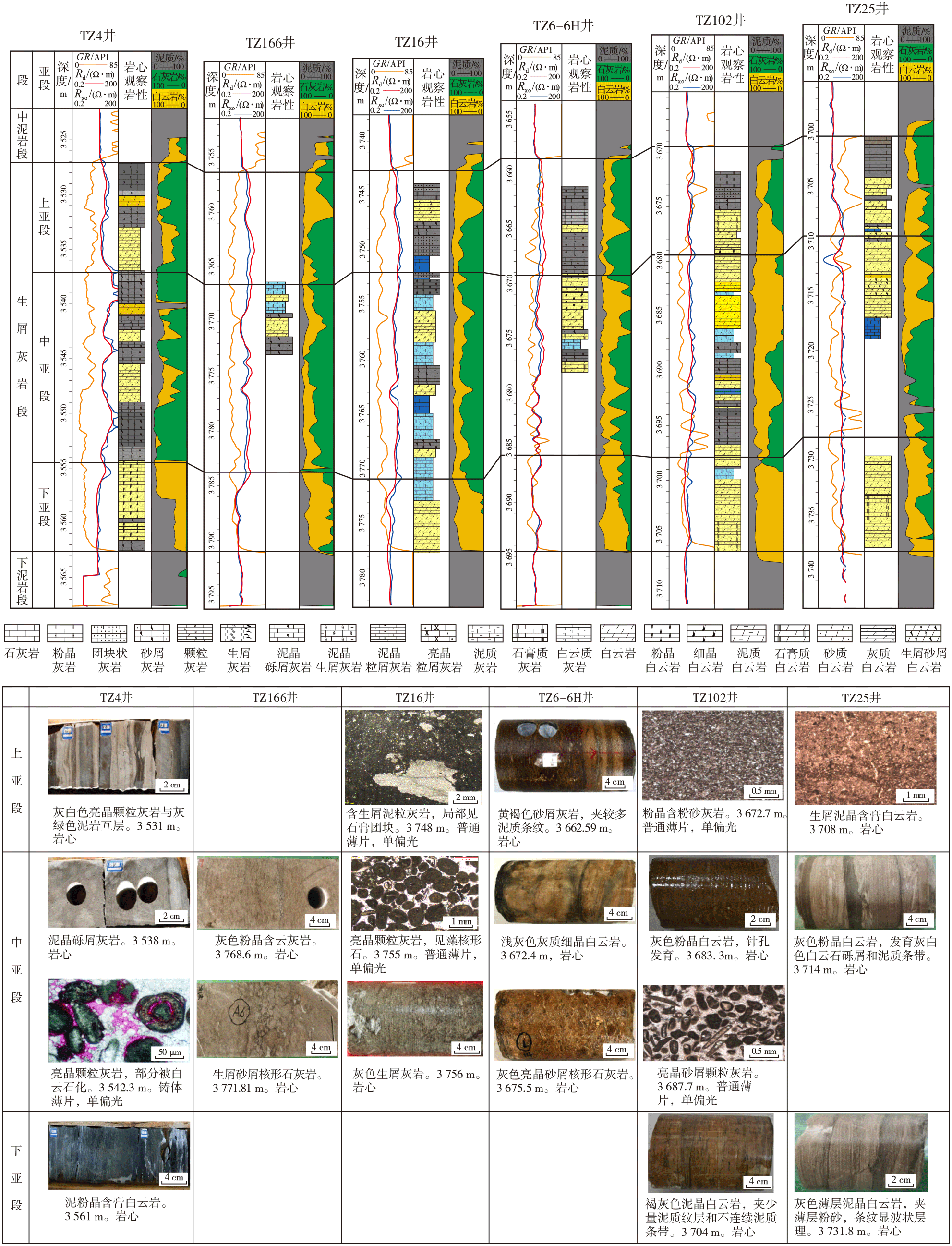
垂向上,生屑灰岩段被划分为下、中、上3个亚段,以TZ16井为例,自下而上整体呈现颗粒含量先增后减、陆源碎屑与膏质含量先减后增的沉积旋回特征(图3)。下亚段以褐灰色纹层状泥晶白云岩为主体,夹薄层粉砂岩及泥质纹层,硬石膏团块普遍发育,自然伽马(GR)曲线呈箱形或轻微锯齿状;中亚段岩性组合复杂,发育10~20 cm级石灰岩-白云岩沉积旋回,底部以生屑灰岩、砂屑灰岩为主,向上过渡为白云岩,次生孔隙(窗格孔、溶孔)发育,GR曲线以漏斗形为主;上亚段陆源碎屑与膏质含量显著增高,顶部出现白云质砂岩及含砂白云岩等混积岩,GR值自下而上呈递增趋势,反映陆源供给持续增强。
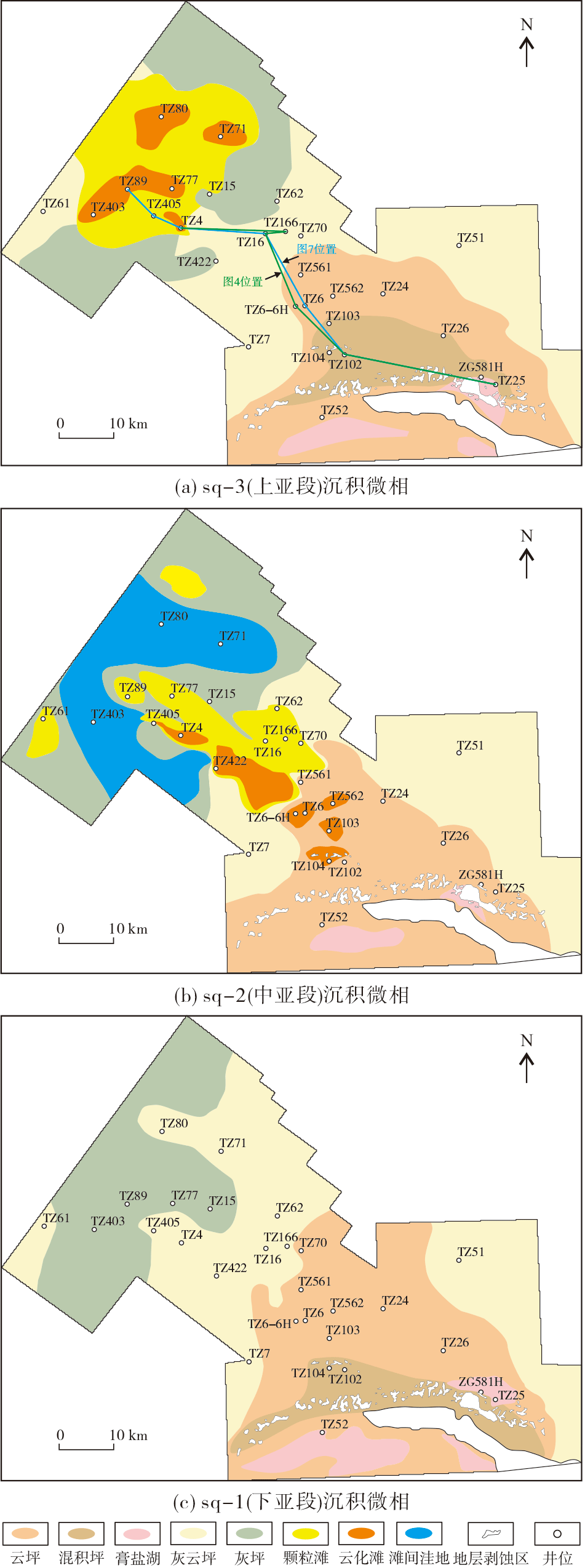
平面上以TZ6-6H井为界,生屑灰岩段的岩石类型呈现东西分带的特征(图4)。东部TZ25井区邻近潜山物源,白云岩发育程度高,硬石膏团块富集且陆源碎屑输入强烈。西部TZ4井区中亚段颗粒灰岩占比突出,颗粒粒径自西向东递减,揭示水动力梯度变化;上亚段碎屑含量自西向东递增,近潜山部位混积岩广泛发育。这种空间分异特征与古地貌控制的沉积物供给差异及成岩作用强度密切相关。
3 沉积环境特征
塔中东部石炭系巴楚组东河砂岩段为滨岸相沉积,下泥岩段以滨海潮坪相为主,生屑灰岩段以碳酸盐台地相为主。生屑灰岩段作为主力储层段,其沉积环境对储层发育具有关键控制作用。通过岩石学特征与地球化学指标综合研究,揭示该层段沉积期受波浪-潮汐联合作用,整体处于蒸发-局限台地环境,发育潮坪、颗粒滩等沉积微相组合,其空间分异受东高西低的古地貌格局控制。
3.1 岩石学环境指示
3.2 地球化学证据约束
生屑灰岩段碳氧同位素组成特征(图5)揭示,沉积环境受控于蒸发作用与海平面波动的动态平衡。全段δ13C值介于1.00‰~7.46‰(平均值为4.46‰),显著高于石炭纪开放海相灰岩背景值(1.5‰~3.0‰),表明碳库受局限台地内有机质降解与泥质输入的共同影响。δ18O值分布范围较宽(-5.07‰~1.05‰,平均值为-0.97‰),呈现典型蒸发环境下的同位素分馏特征。垂向上分层段看,下亚段δ13C值(3.36‰~4.73‰,平均值为4.15‰)与δ18O值(0.01‰~1.05‰,平均值为0.42‰)同步正偏,反映膏质粉晶白云岩主导的潮上带强蒸发环境;中亚段δ13C值在3个亚段中最大(5.08‰~7.46‰,平均值为6.47‰),δ18O值负偏至-1.05‰,与亮晶颗粒白云岩发育耦合,指示潮下带高生产力与短暂海侵淡化事件;上亚段δ13C值回落(1.00‰~4.74‰,平均值为3.36‰)揭示陆源输入增强与淡水混入,这从白云质砂岩等混积岩的发育得到印证。
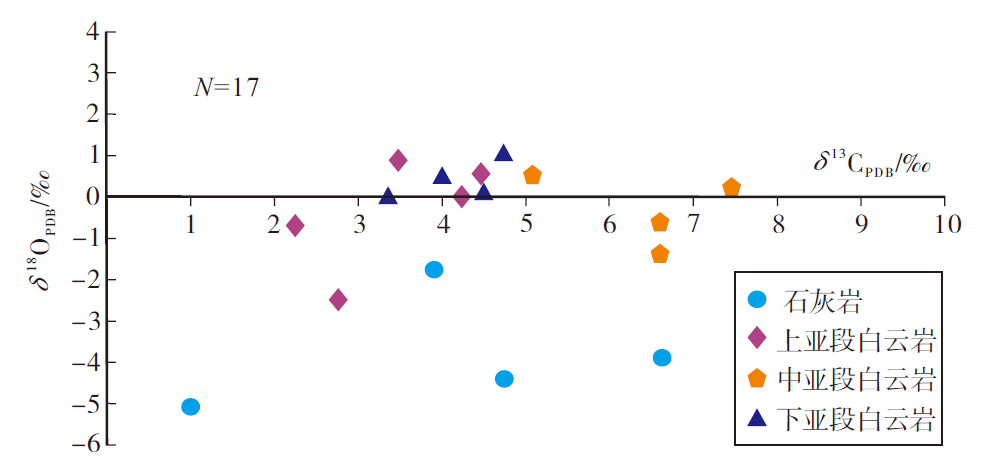
采用Keith-Weber盐度判别公式(Z = 2.048 ×(δ13C + 50)+ 0.498 ×(δ18O + 50))计算古盐度。生屑灰岩全段Z值介于126.8~142.7(平均值为136.3),显著高于咸化阈值(Z > 120),证实沉积水体为高盐度局限环境。生屑灰岩段的古盐度垂向分异显著:下亚段Z值高(134.2~137.5,平均值为136.0),与强蒸发背景下的膏岩-白云岩组合匹配;中亚段Z值进一步升高(138.0~142.7,平均值为140.0),反映白云石化增强与蒸发泵效应叠加;上亚段Z值显著降低(126.8~136.7,平均值为133.4),与淡水注入导致的盐度稀释一致。平面分布上,东部TZ25井区Z值普遍高于西部TZ4井区(ΔZ约为5~8),揭示古地貌控制的蒸发作用强度存在东西分异。
上述地球化学证据表明,生屑灰岩段沉积环境的演化遵循强蒸发—海侵淡化—陆源干扰的三阶段模式:下亚段强蒸发潮坪形成高盐度膏岩-白云岩组合,中亚段海侵事件引发盐度波动与有机质富集,上亚段海退期陆源输入打破盐度平衡。这一演化过程与岩性组合(膏岩→颗粒白云岩→混积岩)及储层物性(中亚段溶孔发育)具有成因关联。
4 层序地层特征
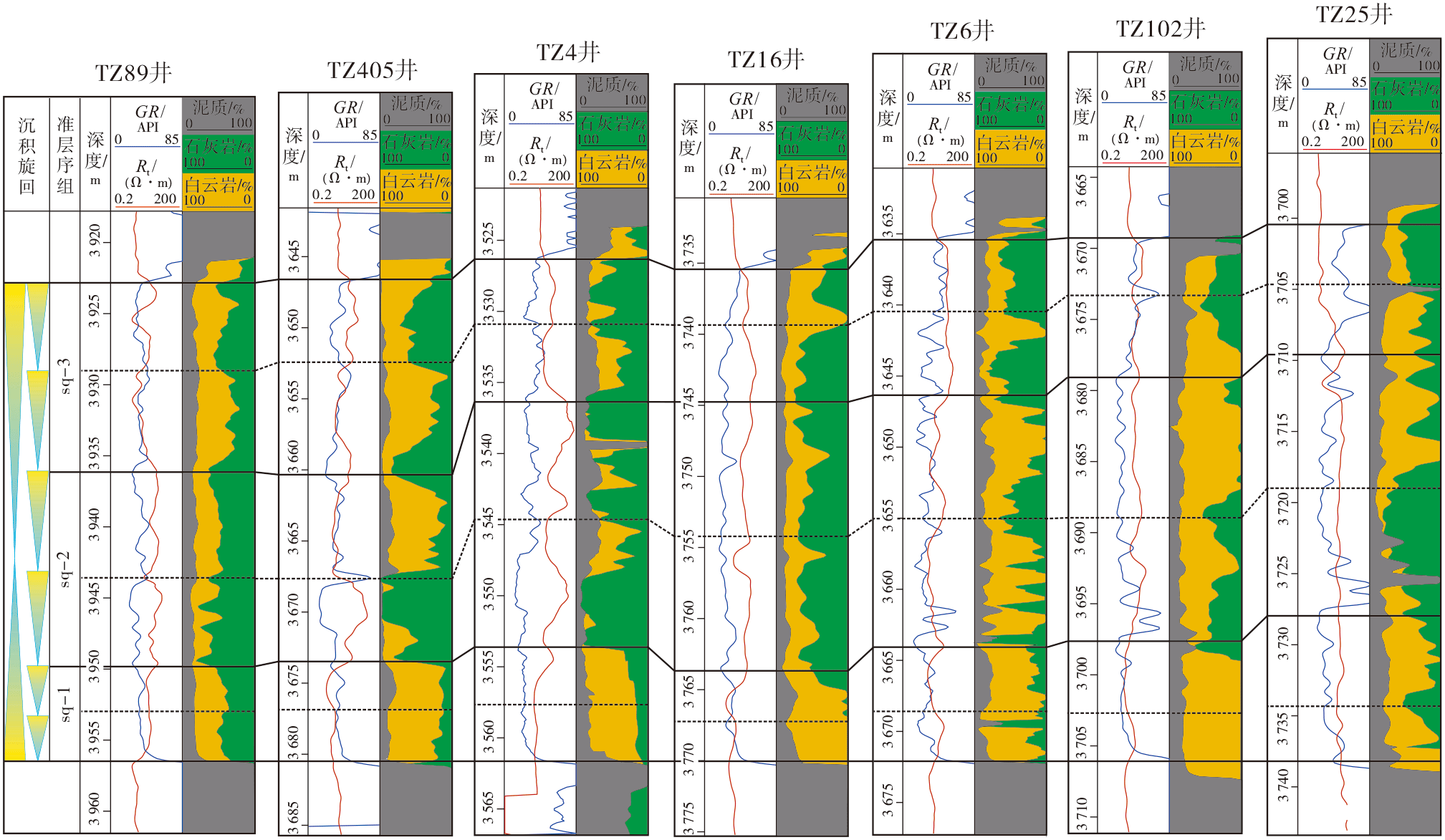
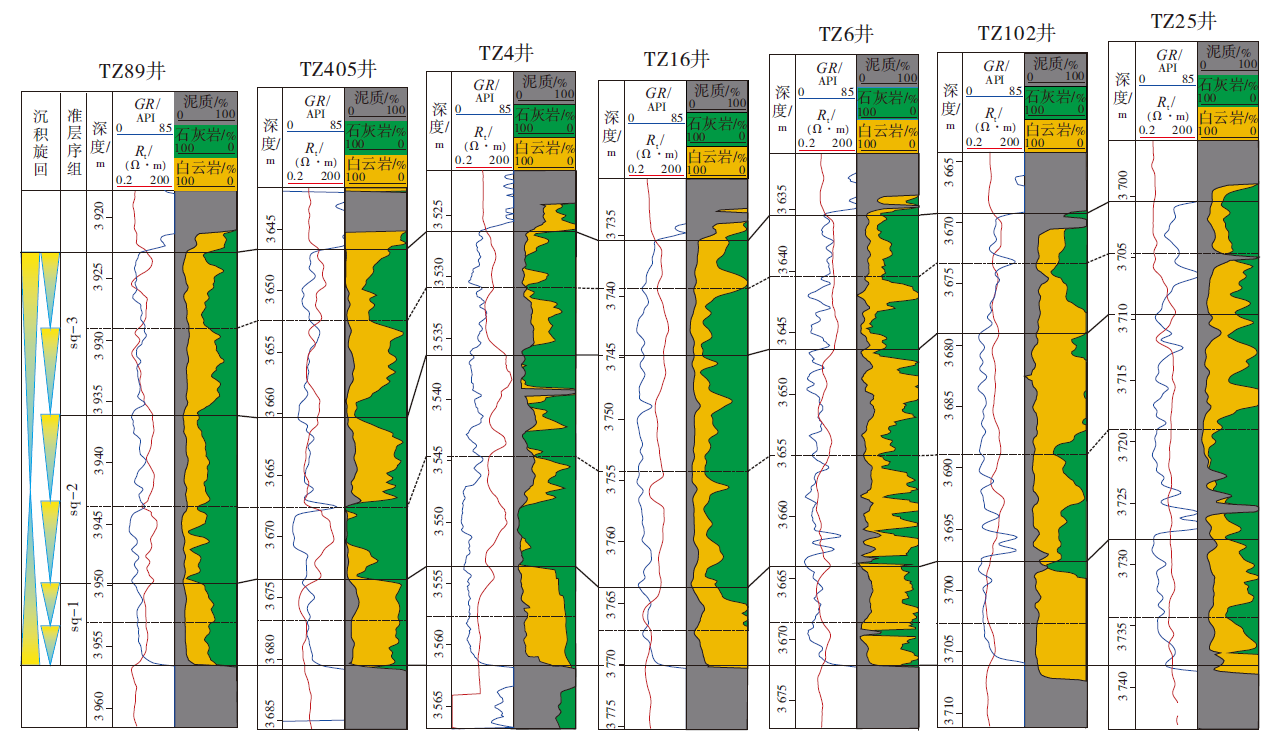
海平面变化与区域构造变迁共同影响着海相碳酸盐岩的层序旋回[21-24]。石炭纪塔中东部的构造作用相对较弱,沉积环境保持稳定[25-26],层序地层演化主要受海平面变化主导。根据Vail经典层序地层学原理,巴楚组生屑灰岩段可作为三级层序(图1b)的一个四级层序,其内部可划分为3个准层序组(图6),分别对应下亚段、中亚段、上亚段。以TZ562井为例,其生屑灰岩段的底界、顶界分别对应于下泥岩段与中泥岩段的岩性转换面,自然伽马曲线在此界面处呈现明显回返特征;最大海泛面位于生屑灰岩段中部,表现为颗粒灰岩与颗粒白云岩集中发育段,其中见有钙质泥岩夹层(井深3 729.5 m),自然伽马值相对较高,与上下层位含泥质纹层、硬石膏颗粒的泥粉晶灰岩和白云岩形成对比。根据自然伽马曲线的旋回性变化,在生屑灰岩段内识别出6个次级海退序列(五级旋回),整体呈现先退积后进积的叠置样式(六级旋回)。

研究区东西向连井剖面(图7)显示,生屑灰岩段这一四级层序的厚度整体稳定,但在各准层序组的空间分异显著。受沉积早期古地貌影响,sq-1(下亚段)厚度自东向西逐渐减薄;sq-2(中亚段)在TZ25井至TZ4井区间增厚,向西迅速减薄,白云岩含量东西分异显著;sq-3(上亚段)厚度变化趋势与sq-2相反,西部沉积较厚,白云岩含量略高于东部。上述特征表明,生屑灰岩段的层序演化受海平面旋回控制,古地貌差异影响沉积物供给与水动力条件,它们共同控制储层岩性组合及非均质性的空间分异。中亚段颗粒灰岩与白云岩互层为优质储层发育段,而上亚段混积岩发育加剧了储层的复杂性。
5 层序对沉积和成储的控制作用
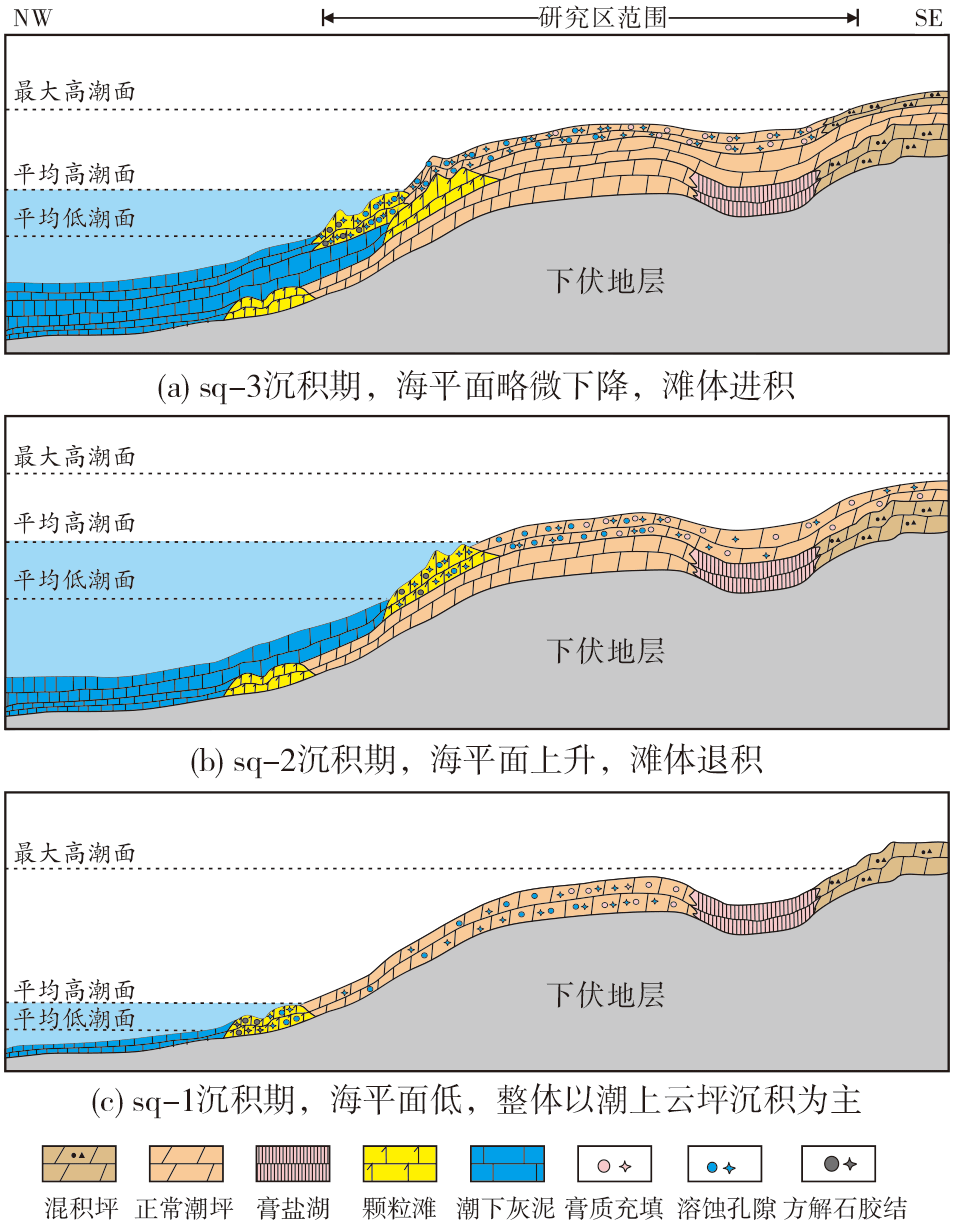
在海平面升降旋回过程中,海侵-海退过程主导的沉积环境变迁直接影响沉积物类型及空间配置。以塔中东部石炭系为例,海侵期陆源碎屑供给减弱与水体加深共同促进碳酸盐岩优势沉积;海退期则表现为陆源输入增强及沉积环境向滨岸带迁移,形成碎屑岩-碳酸盐岩混合沉积体系。研究区生屑灰岩段沉积序列记录了完整的海侵-海退旋回,不同海平面状态下的沉积模式呈现显著分异。在蒸发-局限台地潮坪相背景下,海平面上升时,高能颗粒碳酸盐岩快速堆积,形成厚层颗粒灰岩叠置体;海平面下降时则以潮上带薄层泥晶灰岩-白云岩韵律沉积为主,伴随陆源碎屑的混入形成岩性复合体。古地貌差异与高频海平面波动是控制沉积旋回发育的关键因素[27]:东高西低的古地形格局导致水体深度梯度变化,进而影响沉积相带分异。随着层序演化,潮坪相与颗粒滩相的交替发育为储集体的形成奠定了基础。
高频层序旋回对成岩演化具有显著控制作用。生屑灰岩段的储层发育受控于准同生白云石化、暴露溶蚀及胶结作用的动态平衡。每个次级旋回的中上部发育层控型白云岩,其形成机制符合蒸发白云石化与渗透回流模式。高频海平面下降导致古地貌高部位暴露,大气淡水沿早期孔隙系统进行溶蚀改造。值得注意的是,白云石化作用可增强岩石抗压实能力,而早期白云石化沉积物更有利于后期溶蚀孔隙发育。研究区西部的潮间带颗粒滩相带因叠加高能沉积、白云石化及溶蚀作用,形成高孔渗优质储层。以TZ4井为例,它位于研究区西侧的潮间带上,高频旋回特征清晰,高孔高渗的优质储层主要发育在高频旋回顶部,是目前研究区生屑灰岩段储层最为发育的一口井,已经累计产气1.89×10⁸ m3、产凝析油2.4×10⁴ t。这证明高能颗粒滩沉积叠加早期白云石化作用和大气淡水溶蚀改造可以形成优质储集体。此外,胶结作用对研究区成储的影响也不可忽视,快速海侵导致的胶结充填作用可使部分颗粒灰岩丧失储集能力。
基于层序地层分析,建立了研究区海陆过渡背景下高频海平面旋回控制的混积碳酸盐岩沉积模式(图9)。海平面升降主导的沉积微相垂向分异与古地貌差异控制的平面分带共同决定了储集体的空间展布。sq-2沉积期(中亚段)海平面较高,发育潮间带高能颗粒滩微相,叠加高频暴露旋回的准同生白云石化与大气淡水溶蚀作用,形成孔隙-溶孔型优质储层;sq-1、sq-3沉积期(下亚段与上亚段)海平面较低,则以潮上带蒸发云坪与混积坪微相为主,受陆源碎屑与膏质充填影响,储集性能显著降低。平面上,古地貌东高西低的格局导致中亚段颗粒滩相带沿TZ4井区至TZ16井区呈带状展布,而东部近潜山区域受陆源输入干扰,以低孔渗的蒸发潟湖相与混积坪为主。岩石学特征显示,中亚段颗粒灰岩中窗格孔、粒间溶孔发育,高频旋回顶部白云石化颗粒滩中针孔状结构发育(图4)。该沉积模式显示,海侵鼎盛期颗粒滩相带是优质储层的核心发育区,其分布受控于古地貌缓坡带与高频层序旋回的耦合作用。
基于上述成果认识提出塔中东部地区石炭系勘探开发部署重点方向,即优先针对中亚段颗粒滩相带部署开发井位,并关注古地貌斜坡区溶蚀-白云石化作用叠加的有利区带以提升气藏开发效益。
6 结论
以塔中东部石炭系巴楚组生屑灰岩段为例,利用丰富的岩心、薄片、测井及地球化学等资料,深入分析了混积碳酸盐岩的岩石学特征,构建了层序地层结构并探讨了其对沉积、储层的控制作用。
(1)基于高频层序地层分析,建立了“海侵—海侵高位—海退”3阶段沉积模式:海侵初期(sq-1准层序组)以蒸发潮坪相为主,发育硬石膏-泥晶白云岩组合;海侵鼎盛期(sq-2准层序组)水体加深,古地貌西侧斜坡带发育高能颗粒滩,叠加准同生白云石化与暴露溶蚀作用,形成厚层孔隙型储层;海退期(sq-3准层序组)陆源碎屑输入增强,形成混积潮坪相,储层非均质性加剧。
(2)沉积微相的展布受古地貌与海平面协同控制:东侧潜山周缘(TZ25井区)以蒸发潟湖-混积坪为主,储层物性较差;西侧TZ4井区至TZ16井区发育连片颗粒滩相,白云石化颗粒灰岩溶孔发育,为最有利储集体发育区;层序界面附近(sq-2顶)溶蚀缝洞系统与滩间洼地泥质隔层构成高效输导-封存组合。
(3)成岩-层序耦合分析表明,高频旋回暴露期的大气淡水溶蚀是储层优化的关键,而早期白云石化作用增强了岩石抗压实能力,为孔隙保存提供物质基础。勘探实践中需重点关注中亚段颗粒滩相与古地貌斜坡带的叠合区,并利用层序格架对储层的纵向分带性进行合理预测。
(4)本文提出“构造控貌、层序控相、成岩控储”三位一体勘探评价思路,为塔中东部石炭系混积碳酸盐岩的油气藏开发提供了新靶区。未来需进一步探讨高频旋回尺度下海平面波动与成岩流体响应的定量关系,以完善混积体系的储层动态演化模型。